
Rough Terrain Scissor Lift Rental for Outdoor Work
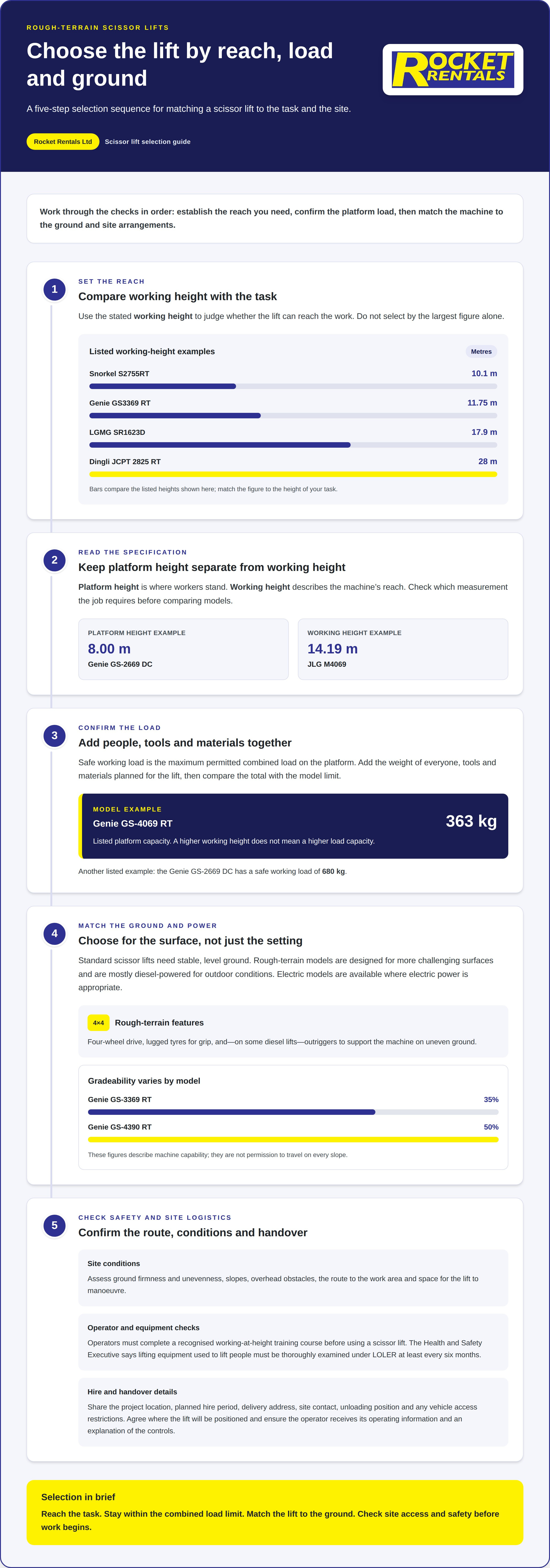
The highest scissor lift isn’t automatically the right choice for outdoor work. With a rough terrain scissor lift rental, the machine’s working height must suit the task, while its safe working load must cover the people and materials on the platform. Listed examples range from 10.1 m for the Snorkel S2755RT to 28 m for the Dingli JCPT 2825 RT.
Choosing a lift for uneven ground takes more care than choosing one for a firm, level surface. Rough-terrain models are designed for challenging ground, while standard scissor lifts need stable, level ground to operate safely.
This guide explains the difference between working height and platform height, why reach and safe working load must be considered together, and where rough-terrain models may be suitable. It also covers what to consider when arranging hire so the equipment matches your site and the work.
Table of Contents
How high can a scissor lift go?
Reach varies by model. The Snorkel S2755RT reaches 10.1 m, while the Genie GS3369 RT is listed at 11.75 m. Larger machines extend further: the LGMG SR1623D reaches 17.9 m, and the Dingli JCPT 2825 RT is listed at 28 m. Compare the stated working height with the height of the task, not just the platform height.
Power affects where a lift can work. Electric models, such as the Skyjack 6832RTE, suit jobs where electric power is appropriate; its listed height is 11.58 m. Diesel rough-terrain scissor lifts are mostly used for outdoor conditions, with power to travel over challenging surfaces. Scissor lifts are available with different power options, depending on the model.
For outdoor ground, 4x4 diesel scissor lifts combine four-wheel drive with rough-terrain design. Lugged tyres have a treaded profile to grip the surface, while some diesel lifts have outriggers to support the machine on uneven ground. Gradeability differs by model: the Genie GS-3369 RT is listed at 35%, and the GS-4390 RT at 50%. These figures describe machine capability, not permission to travel on every slope.
A hire provider should check that intended operators have completed a recognised working-at-height training course; operators are legally required to complete one before using a scissor lift. According to the Health and Safety Executive, UK lifting equipment regulations typically require LOLER inspections every six months. Before delivery, the provider should assess the ground’s firmness and unevenness, the route to the work area, slopes and space for the lift to manoeuvre. Those conditions help determine whether the selected rough-terrain model is suitable.
Other models broaden the range: the Skyjack SJ6832 RT diesel scissor lift is listed at 11.8m, and the Snorkel S3370RTE electric scissor lift is listed at 12.0m.
Working heights and safe working loads
Compare the height of the work area with the machine’s platform capacity. These details help identify a lift that can reach the task and carry the intended load.
Maximum working heights
Listed working heights vary considerably: the Genie GS1532 reaches 6.4 m, while the JLG M4069 reaches 14.19 m. For rough-terrain work, the Genie GS4390RT is listed at 15.11 m. Compare the model’s stated working height with the task’s required reach, and consider the platform’s position relative to the work area. Choose for the job, not the highest figure alone.
Platform height
Platform height is the height of the work platform itself, not the working height. The Genie GS-2669 DC has a platform height of 8.00 m, while its listed safe working load is 680 kg. Keep these measurements distinct when comparing specifications: working height describes reach, while platform height helps establish where workers will stand. Check which figure the task requires.
Safe working loads
Safe working load is the maximum permitted combined load on the platform. Include the weight of everyone, tools and materials planned for the lift, then compare that total with the model’s stated limit. For example, the Genie GS-4069 RT has a platform capacity of 363 kg. A higher working height does not mean a higher load capacity, so compare both specifications.
Regulations and safety checks
The Health and Safety Executive says lifting equipment must be thoroughly examined under LOLER at least every six months when used to lift people. Operators must also complete a recognised working-at-height training course before using a scissor lift. For outdoor work, assess the ground, slopes, access routes and overhead obstacles. Risks include instability, collision and overloading, so match the machine to site conditions and its load limit before work begins.
Rough-terrain scissor lift hire
Plan the machine, hire period and site arrangements together. Sharing clear details helps coordinate delivery and collection with the project schedule.
UK-wide hire availability
For rough terrain scissor lift rental, explain the task, site conditions and when you need the lift. Rocket Rentals Ltd offers scissor lift hire for construction and industrial projects. Its hire terms are extremely flexible, with discounts for longer hire periods. Share the project location and planned hire period to help organise the arrangements.
Hire periods and planning
Give the expected start and finish dates when arranging hire. A weekly period may suit work planned across a working week, while a longer project needs dates that reflect its programme. Share likely schedule changes early so the hire period can be planned around the stages when access equipment is needed.
Delivery, collection and handover
For rough terrain scissor lift rental, provide the delivery address, a site contact and the planned dates. Explain where the lift should be unloaded and describe any vehicle access restrictions. These details help coordinate delivery and collection with site operations. At handover, the operator should receive the machine’s operating information and an explanation of its controls.
Agree who will receive the lift and where it should be positioned. Before collection, make sure the agreed location is accessible and the site contact knows when the equipment is due to leave. If the work programme changes, update the hire arrangements so delivery, use and collection stay aligned with the revised schedule.
Price information can help shape the hire request alongside the site and schedule details. The listed hire price for the 14.5 m rough terrain scissor lift is POA per week, excluding VAT. Treat these as model-specific listing details when comparing hire options, and confirm the applicable rate for the equipment and period being arranged. Clarifying which machine is required, the intended hire period and the site arrangements helps keep the quotation aligned with the project’s needs.
Indoor and outdoor scissor lift use
The key consideration is the work surface, not simply whether the job is indoors or outdoors. Standard scissor lifts need stable, level ground and are not designed for uneven surfaces. A warehouse floor may suit a standard lift, while a rutted construction site calls for a rough-terrain model. Match the machine to the ground where it will operate.
Rough-terrain scissor lifts are designed for challenging outdoor ground conditions, but suitability still depends on the site. Assess slopes, soft patches, ruts and the planned travel route. A firm access track leading to an uneven work area presents different demands from consistently level ground. Share these details so the equipment can be matched to the operating area.
Indoor work needs its own checks. Measure access points and the route through the building, including doorways, corridors and work areas. Consider overhead obstructions and the space available to position the platform. A lift that reaches the required work height may still be unsuitable if it cannot pass through the entrance or manoeuvre near the task.
If a project moves between indoor and outdoor areas, identify each work location before choosing equipment. A level concrete floor and an uneven external yard may require different machine capabilities. Explain where the lift will travel, which surfaces it will cross and where it will be raised. Choose for the most demanding surface and access point on the route, not just the final work position.
Rocket Rentals: Scissor Lift Hire
Rocket Rentals Ltd provides Scissor Lift Hire for construction and industrial projects across the UK. It’s a practical option when your work needs access equipment for a specific task or site, rather than a permanent purchase.
For outdoor work, share the task, required working height, platform load and ground conditions. Include the site layout and access restrictions. These details help match the equipment to the task and show how the lift will be used. The selected machine needs to suit the site as well as the work.
Equipment inspection helps maintain its safe, operational condition. At handover, the operator should receive information about the lift’s controls and operating instructions. Operators must complete a recognised working-at-height training course before using a scissor lift.
Share the expected work dates and any important site requirements. This helps plan equipment use around your programme, particularly when access needs change between project stages.
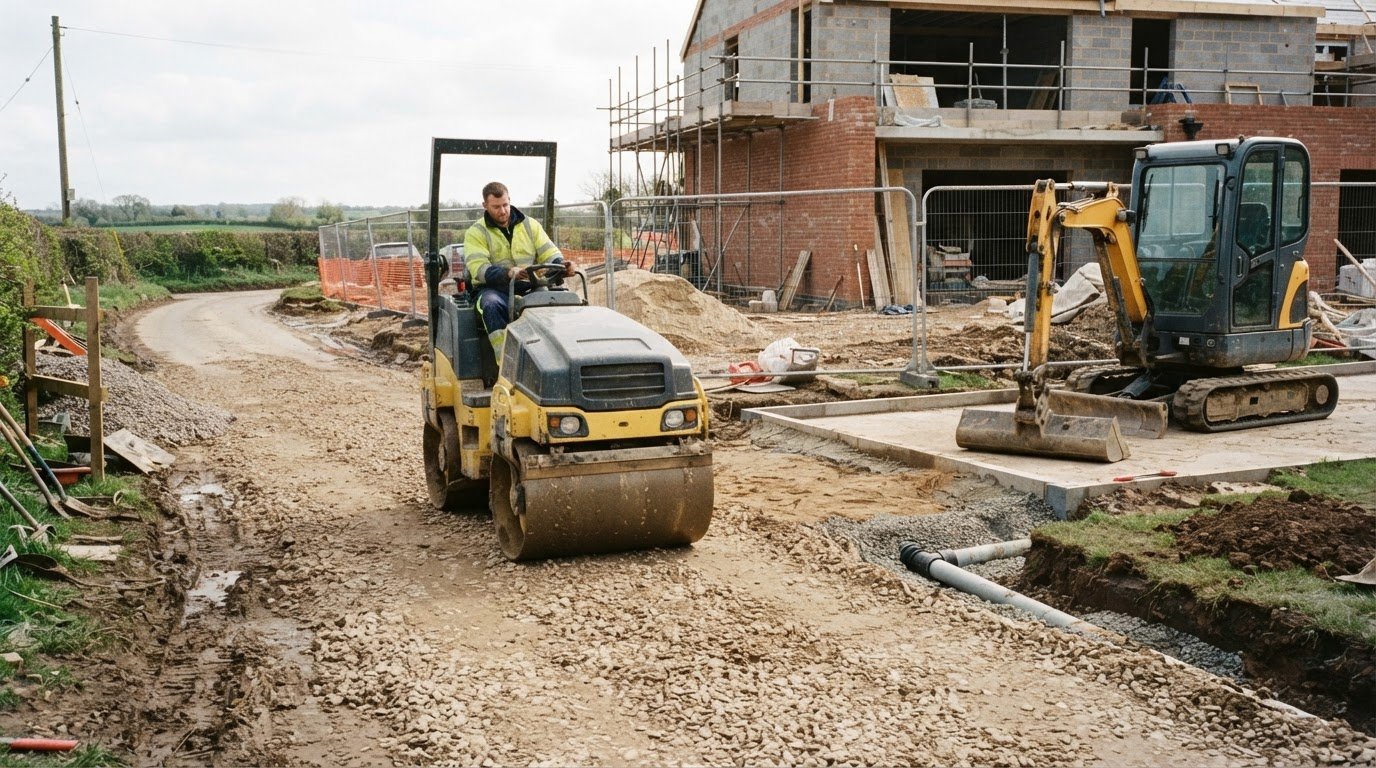
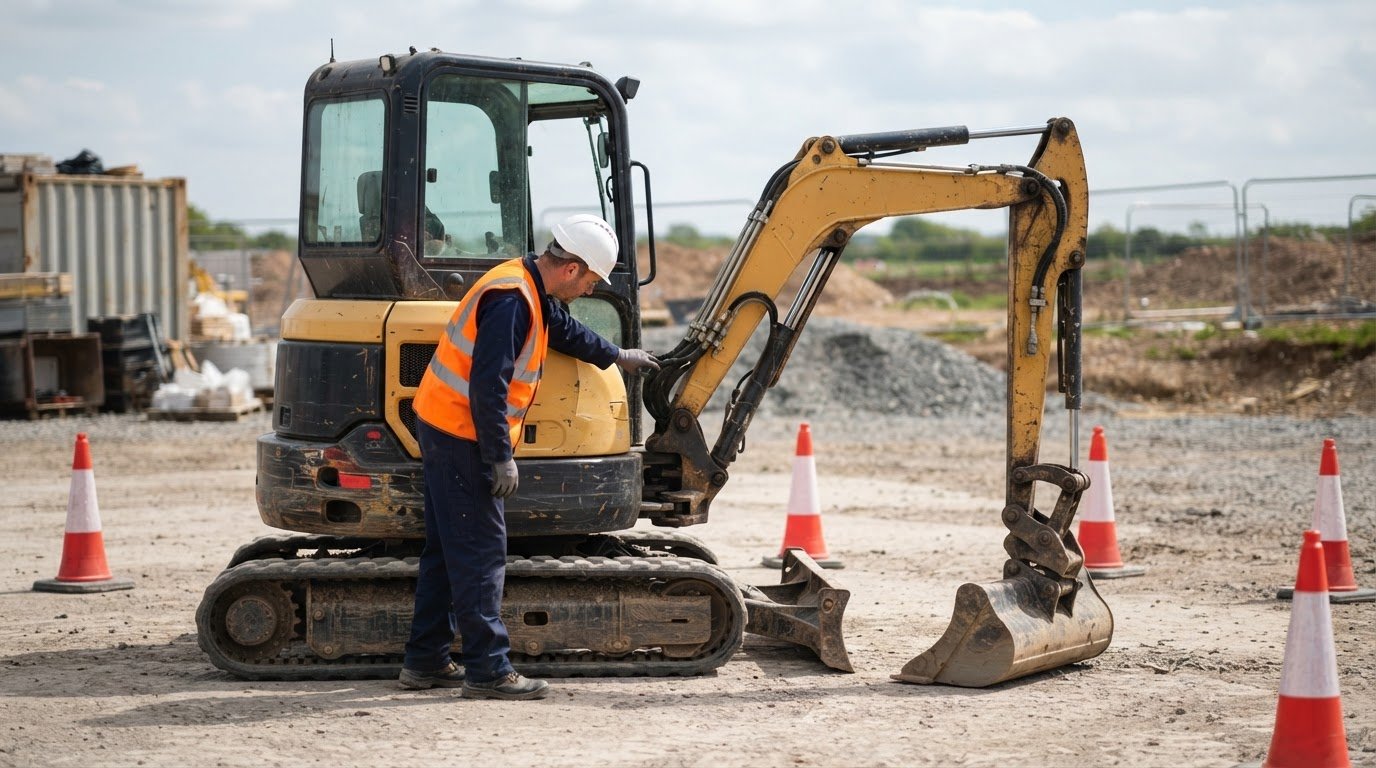
As a local, family-run business serving customers across the UK, Rocket Rentals Ltd can also support site work with Mini Digger Hire, Excavator hire or Roller Hire where those machines suit the project.
To discuss your scissor lift hire requirements, contact Rocket Rentals Ltd.
Frequently Asked Questions
What are scissor lifts used for?
Scissor lifts provide a raised work platform for tasks that require people and equipment above ground level. Examples include installing lighting, maintaining ceilings and repairing building façades. The platform rises vertically, which can be useful when workers need room for tools across a broad work area. The right model depends on the task and site.
What is a rough terrain scissor lift and what jobs is it suitable for?
A rough-terrain scissor lift is designed for access work on challenging outdoor ground. It may suit construction tasks such as fitting external cladding or carrying out maintenance around a developing site. Work across an uneven yard, for example, may call for a machine designed for that surface. The site layout and intended task determine whether this lift is suitable.
What rough terrain scissor lift heights, platform capacities and sizes are available to rent in the UK?
UK hire listings include models with varied working heights, platform capacities and dimensions. For example, the Skyjack SJ9241RT is listed with a working height of 14.50 m. The Genie GS2669RT has a stated safe working load of 680 kg, while the Genie GS-3390 RT platform measures 3.98 m by 1.83 m. These examples can help you identify which specifications matter for your task.
How can I arrange rough terrain scissor lift hire in the UK?
Daily, weekly or monthly hire periods depend on the project and equipment required. Outline the work stages and when access equipment will be needed to plan the hire period. A short task may need a different schedule from a project with several phases. Share expected programme changes so the hire period can be planned around the work. Hire terms are flexible.
Which UK hire companies offer rough terrain scissor lifts and deliver to my area?
Rocket Rentals Ltd offers Scissor Lift Hire to customers across the UK. For a site-specific enquiry, provide your postcode, intended work and access details. Explain any restrictions on the route into the site and identify a suitable delivery contact. This information helps the team understand the location and plan the hire arrangements around your project’s requirements.
Comments