
HSE guidelines for operating excavators and daily safety checks
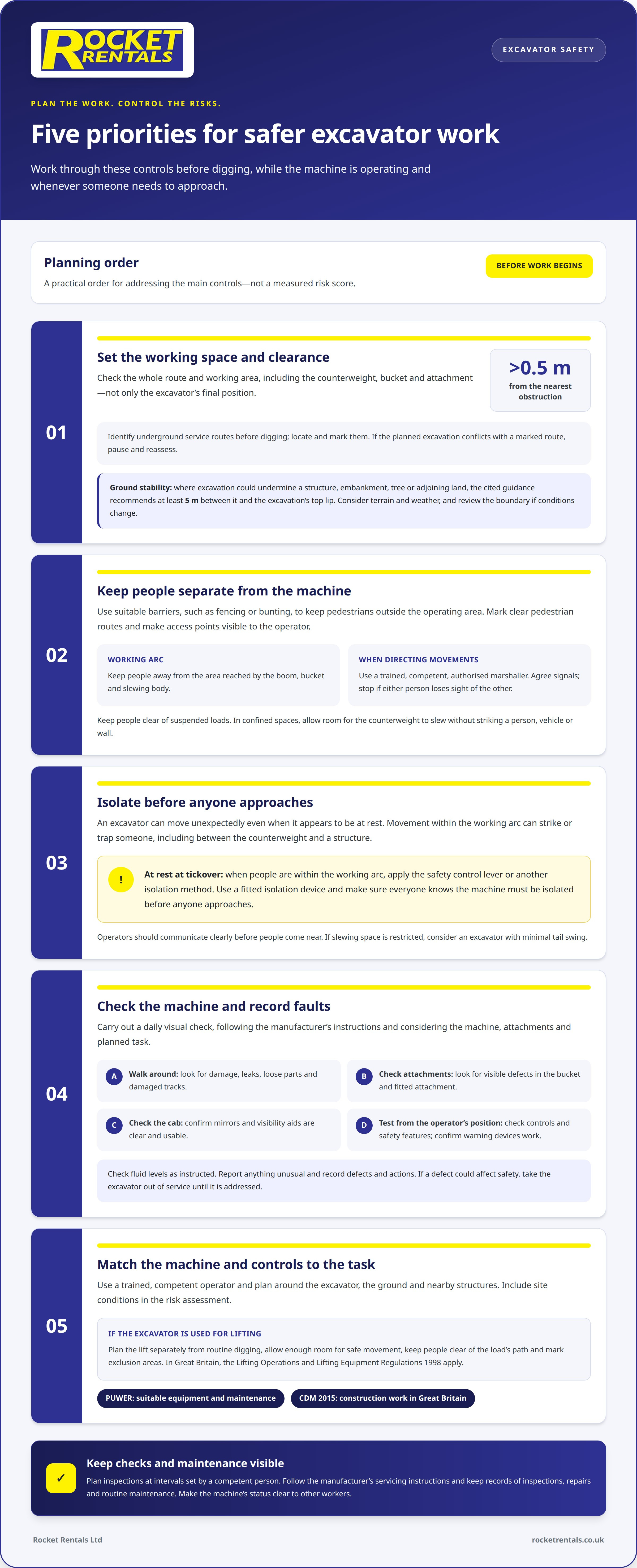
An excavator can move unexpectedly even when it appears to be at rest, so safe operation depends on more than careful driving. The HSE guidelines for operating excavators centre on assessing the task, checking the machine, using a trained operator and keeping people clear of danger. Maintain more than 0.5 m of clearance between any part of the excavator and the nearest obstruction.
You may know that daily checks and a well-planned work area help prevent incidents. The harder part is spotting less obvious risks, such as blind spots, slewing movements and trapping points, before work begins.
This guide covers what to inspect, how to manage clearance and keep pedestrians separate, and why the machine must be isolated before anyone approaches. It also explains operator competence and the additional requirements for using an excavator for lifting.
Table of Contents
Clearance around excavators
On UK sites, maintain more than 0.5 m between any part of an excavator and the nearest obstruction. Include the counterweight, bucket and attachment when judging the machine’s full working space. Check the route to the digging area, not just the final position. A clear route helps prevent contact with walls, stored materials, vehicles and overhead or ground-level hazards.
Before digging, use site information to identify likely underground service routes, then locate and mark them on the ground. Set the excavation boundary and work method around those services, keeping the bucket clear of marked routes. If the planned excavation conflicts with a service route, pause and reassess before digging.
In Great Britain, the Provision and Use of Work Equipment Regulations 1998 (PUWER) requires work equipment to be constructed or adapted to be suitable for its purpose, according to the UK legislation register. The Construction (Design and Management) Regulations 2015 apply to construction work in Great Britain, according to the UK legislation register. Site planning should therefore account for the excavator, the ground and nearby structures.
Keep pedestrians outside the excavator’s operating area with suitable barriers, such as fencing or bunting. Mark a clear route around the work zone and make access points visible to the operator. In confined spaces, allow enough room for the machine to slew without its counterweight striking a person, vehicle or wall.
Consider ground stability as well as machine clearance. If excavation could undermine a structure, embankment, tree or adjoining land, the Russell Society guidance recommends leaving at least 5 m between it and the excavation’s top lip. Site conditions can affect stability, so include terrain and weather in the risk assessment and review the boundary if conditions change.
If an excavator is used for lifting, the Lifting Operations and Lifting Equipment Regulations 1998 apply in Great Britain, according to the UK legislation register. Plan the lift separately from routine digging, keep people clear of the load’s path and allow the machine enough space to move safely. Barriers and clearly marked exclusion areas help protect people nearby.
Daily checks, inspections and servicing
A daily visual check can reveal damage or faults before work starts. Follow the manufacturer’s instructions and consider the machine’s condition, attachments and planned task. Walk around the excavator to look for visible damage, leaks, loose parts, damaged tracks, and problems with the bucket or attachment. Check that the cab, mirrors and visibility aids are clear and usable.
From the operator’s position, check the controls and safety features. Confirm they respond as expected and that warning devices work. Check fluid levels according to the manufacturer’s instructions, and report anything unusual rather than dismissing it as minor. Record defects and actions through the site’s reporting process so the next operator knows the machine’s status.
Look for leaks, damage and loose components around the machine.
Check tracks, bucket and fitted attachment for visible defects.
Confirm the cab, controls and visibility aids are serviceable.
Report faults and record the outcome before work proceeds.
Daily checks are one part of a wider maintenance programme. In Great Britain, excavators used only for conventional earthmoving are subject to PUWER and need an appropriate maintenance regime, including inspections at intervals set by a competent person. Plan servicing in line with the manufacturer’s instructions and the risks associated with the excavator. Record inspections, repairs and routine maintenance.
If a reported defect or problem could affect safety, take the excavator out of service until it is addressed. A fault with the controls, brakes, visibility or attachment can affect safe operation. Make the machine’s status clear to other workers and prevent further use until the repair and necessary checks are complete.
Maintenance and refuelling can also create risks. Use suitable access and a safe working position to avoid falls when reaching parts of the machine. Do not reach from unstable footing or work where moving parts could pose a risk. Keep service records with the machine’s maintenance history so recurring faults and completed work are visible to those managing its use.
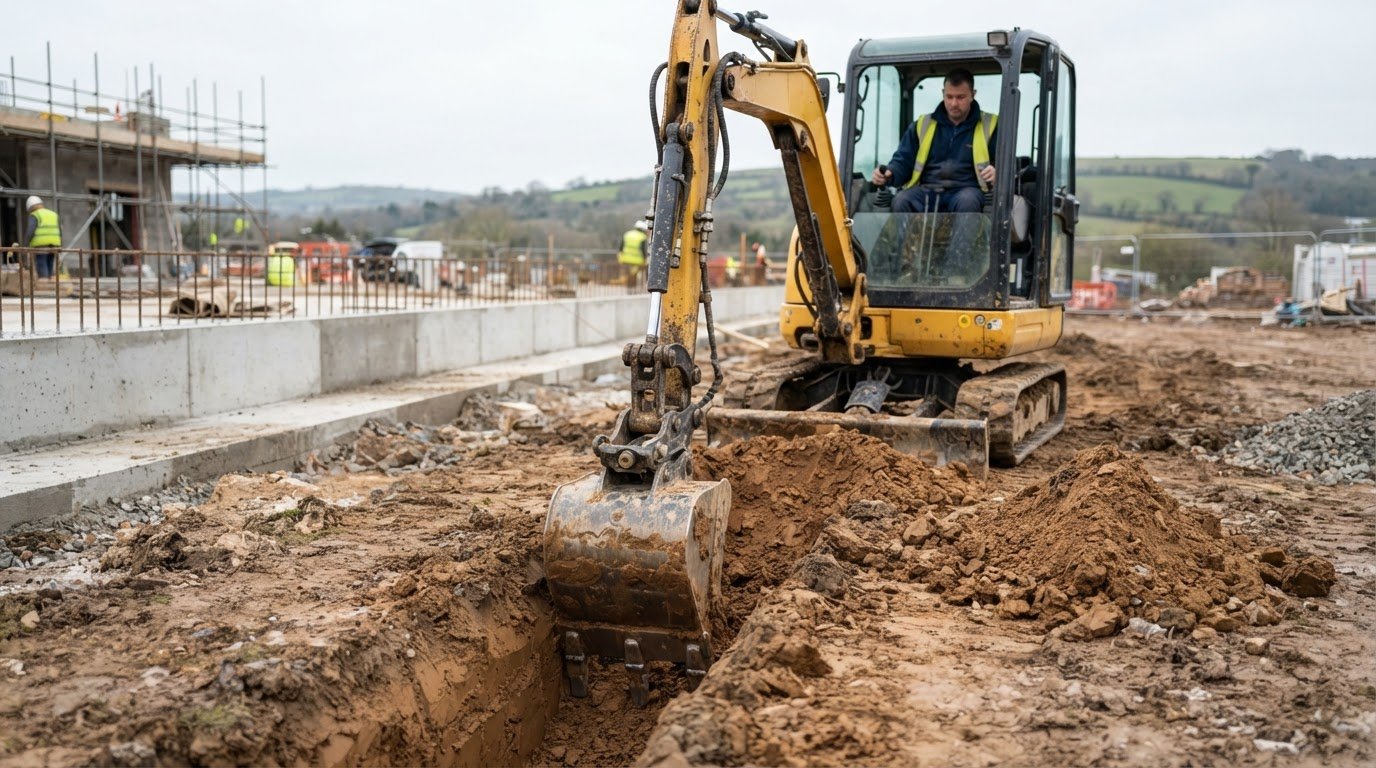
Excavator collision and trapping hazards
An excavator can strike or trap someone within its working arc, between the counterweight and a structure, or near a suspended load. Even small, unexpected movements can cause serious harm when the machine appears to be at rest.
Preventing collisions and trapping
The working arc covers the area reached by the boom, bucket and slewing body. Anyone entering it could be struck, crushed against a fixed structure or hit by a swinging load. In a fatal incident, a slinger was crushed between a quick hitch and a structure after the excavator slewed while its safety control lever was not applied.
When people are within the working arc, apply the safety control lever or another isolation method while the machine is at rest at tickover. Use a fitted isolation device, and ensure everyone knows that the machine must be isolated before anyone approaches. Operators should communicate clearly before people come near.
Operating safely near people
When people are nearby, separate pedestrians from excavators and use a trained, competent, authorised marshaller to direct movements. Keep people outside the working arc and away from suspended loads. Agree signals in advance, and stop if the operator or marshaller loses sight of the other.
Site managers should set safe pedestrian routes and explain how people can alert drivers to their presence. Choose machinery with good visibility from the driver’s position and suitable visibility aids. If slewing space is restricted, consider an excavator with minimal tail swing to reduce the risk of the rear striking people or nearby objects.
Position the marshaller so they can see the excavator and its route while remaining protected where possible. Plan traffic routes to keep pedestrians from crossing the machine’s path, and remove obstructions from the route. If visibility is blocked or someone enters the operating area, stop the machine until the hazard is managed.
An excavator at rest can still move unintentionally if a control is touched. Duty holders should monitor the use of safety control devices and ensure workers understand when isolation is required. A banksman or marshaller helps direct safe movement but does not replace pedestrian separation, clear communication or the operator’s responsibility to stop when conditions change.
Excavator operating overview
Safe operation starts with matching the machine and operator to the task. A site risk assessment should consider the ground, weather, access and planned work.
Training and operator competence
Competence requires the training, experience and knowledge to operate the specific excavator safely. Employers and duty holders must ensure operators are trained, assessed and competent for their tasks, and authorised to use their assigned machine. For forestry and other tree work, the relevant NPTC FMOC qualification should match the excavator work.
Training matters because controls and working conditions vary between tasks. A competent operator can follow the planned method, recognise changing site risks and communicate with colleagues. Provide suitable supervision and procedures, especially when the task or equipment changes.
Seat belts and protective structures
Seat belts, rollover protective structures (ROPS) and falling-object protection are safeguards to consider when assessing whether an excavator is suitable. The required setup depends on the machine, task and site hazards, so include these protections in the equipment assessment.
Ground conditions and nearby work, for example, can affect hazards around the cab. Select equipment suited to those risks and use its protective features as intended. Base the choice on a risk assessment rather than assuming one cab arrangement suits every excavator task.
Regulations for excavator operation
In Great Britain, PUWER requires work equipment to be suitable for its purpose, according to the UK legislation register. The Lifting Operations and Lifting Equipment Regulations 1998 apply when an excavator is used for lifting, according to the UK legislation register. The Construction (Design and Management) Regulations 2015 apply to construction work in Great Britain, according to the UK legislation register.
Excavators are primarily designed for earthmoving, so they are generally not the most suitable equipment for lifting. If lifting is planned, assess the task and equipment, and ensure the excavator undergoes thorough examination. Excavators used for lifting also need additional safety devices, such as check valves and an audible warning device.
Working on slopes and near edges
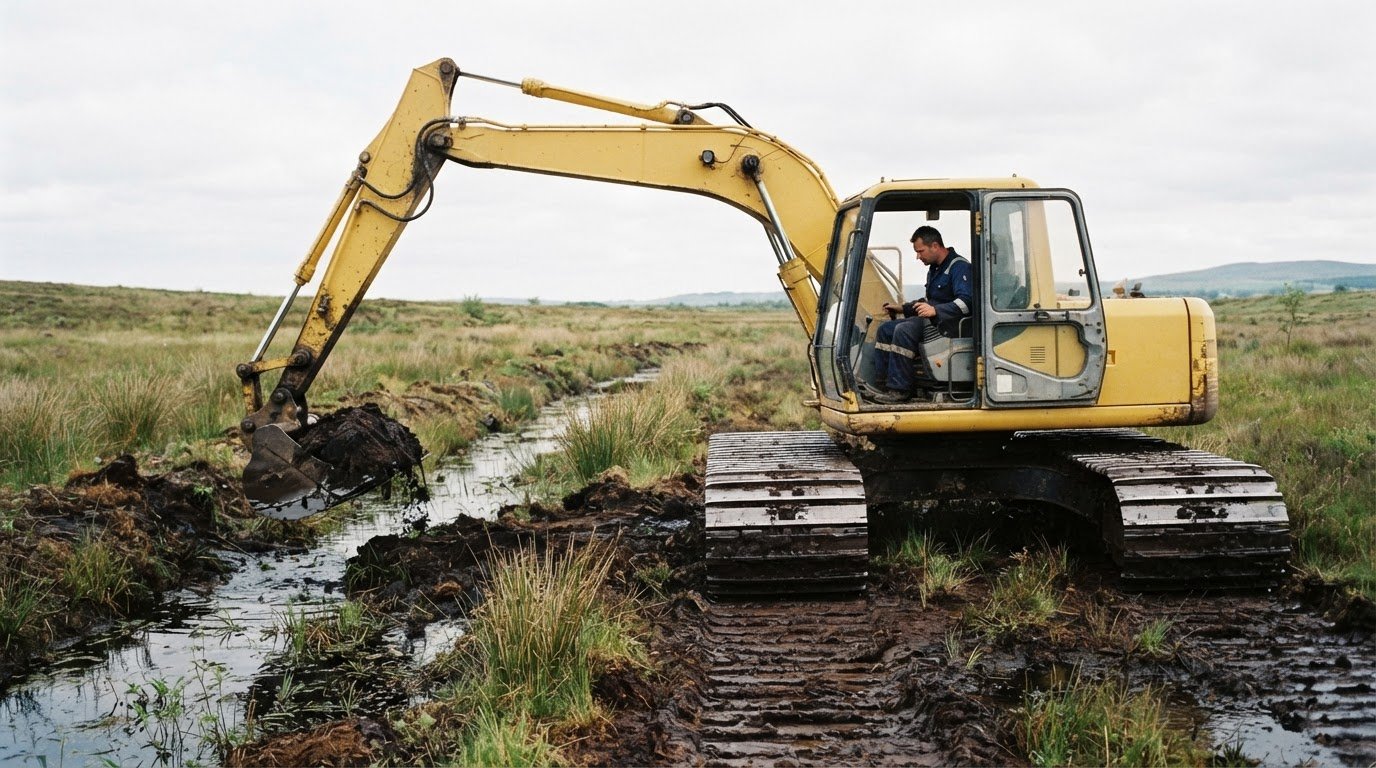
Slopes and edges can affect the stability of the excavator’s working area. Assess the terrain and weather before work, and include both in the site risk assessment. Plan the machine’s position, travel route and parking area to suit those conditions.
Keep excavation work clear of places where digging could undermine structures, embankments, trees or adjoining land. Reassess the method if ground conditions or weather change. Safe operation depends on choosing suitable equipment and planning for the actual site, rather than relying on one approach for every slope.
For an excavator suited to your project, explore excavator hire options.
Rocket Rentals
Rocket Rentals Ltd is a trusted, family-run business supplying excavators, mini diggers and attachments for excavation work, plus rollers and welfare units for site needs. Its self-drive plant hire supports construction, civil engineering and industrial projects nationwide. Equipment is thoroughly inspected, while the operator and site team remain responsible for safe operation and site arrangements.
Choose equipment to suit the task, site access and ground conditions. Match the machine and attachment to the work, and ensure the site team has suitable operator competence, risk assessments and safe working arrangements. This helps you plan equipment hire alongside the controls covered in this guide.
Contact Rocket Rentals Ltd to discuss plant hire for your project.
Plan your next excavation with confidence
Turn the HSE guidelines for operating excavators into a practical site plan. Consider how the equipment, task and working area fit together, then make sure everyone involved understands their role before work begins.
Good planning carries safety measures from preparation through to operation. Include equipment selection in your project decisions so the machine suits both the work and site conditions.
If you’re preparing for excavation work, contact Rocket Rentals Ltd to discuss your equipment requirements and plan your next step.
Frequently Asked Questions
What UK HSE guidance applies to excavator operation?
The HSE guidelines for operating excavators sit alongside work-equipment, lifting and construction rules, and HSE guidance for safe site work. In Great Britain, PUWER, LOLER and CDM apply to their relevant activities, according to the UK legislation register. HSE guidance also points readers to Health and safety in construction, HSG 150. The task risk assessment should connect these requirements to the machine, site layout and work method.
What pre-use checks should excavator operators carry out?
Use HSE guidelines for operating excavators alongside the manufacturer’s instructions and the site’s check procedure before starting work. Include the attachment fitted for the shift: look for visible damage and confirm it is secured as instructed. Review the operator’s information for task-specific checks, then record and report defects through the site process. If an issue affects safe use, keep the excavator out of service until it is addressed.
What are the main excavator hazards and how can they be controlled?
Key hazards include people entering the machine’s working arc, being trapped against fixed objects, poor visibility and contact with suspended loads. Plan traffic routes to separate pedestrians from plant, and use a trained marshaller to guide movements where needed. Agree clear communication before work starts. If the operator loses sight of the marshaller or someone enters the work area, stop movement until it is safe to continue.
What procedures apply to excavator maintenance, refuelling and isolation?
Follow the manufacturer’s maintenance instructions and the site’s planned servicing arrangements, carrying out work from safe access and stable positions. Refuelling and maintenance can expose operators to falls, so avoid unsafe access around the machine. Before anyone approaches within the working arc, apply the safety control lever or another isolation method while the excavator is at rest at tickover. Use a fitted isolation device where available, and report safety-critical faults.
Comments