
How to Protect Ground from Heavy Machinery with Ground Mats
Ground can be damaged long before heavy machinery gets stuck. If you’re considering how to protect ground from heavy machinery, ground protection mats provide a stable surface that helps spread loads across vulnerable areas.
This matters on soft, wet or uneven ground, where repeated traffic can compact soil, damage vegetation and disrupt drainage. Mats can also help reduce erosion and surface damage, but their effectiveness depends on choosing a suitable system for the machinery, ground conditions and work area. They create temporary access routes or working surfaces, rather than leaving bare ground to take the full impact.
This guide explains how ground protection mats work, how they can limit compaction and drainage problems, and what to consider when planning their use. It also covers how placement, site conditions and the time mats remain in place can affect the ground beneath them.
Table of Contents
What is external ground protection?
External ground protection is temporary matting that creates a stable surface for machinery, vehicles and people. The right choice depends on the underlying ground and the loads moving across it.
Matching Mats to Ground and Traffic
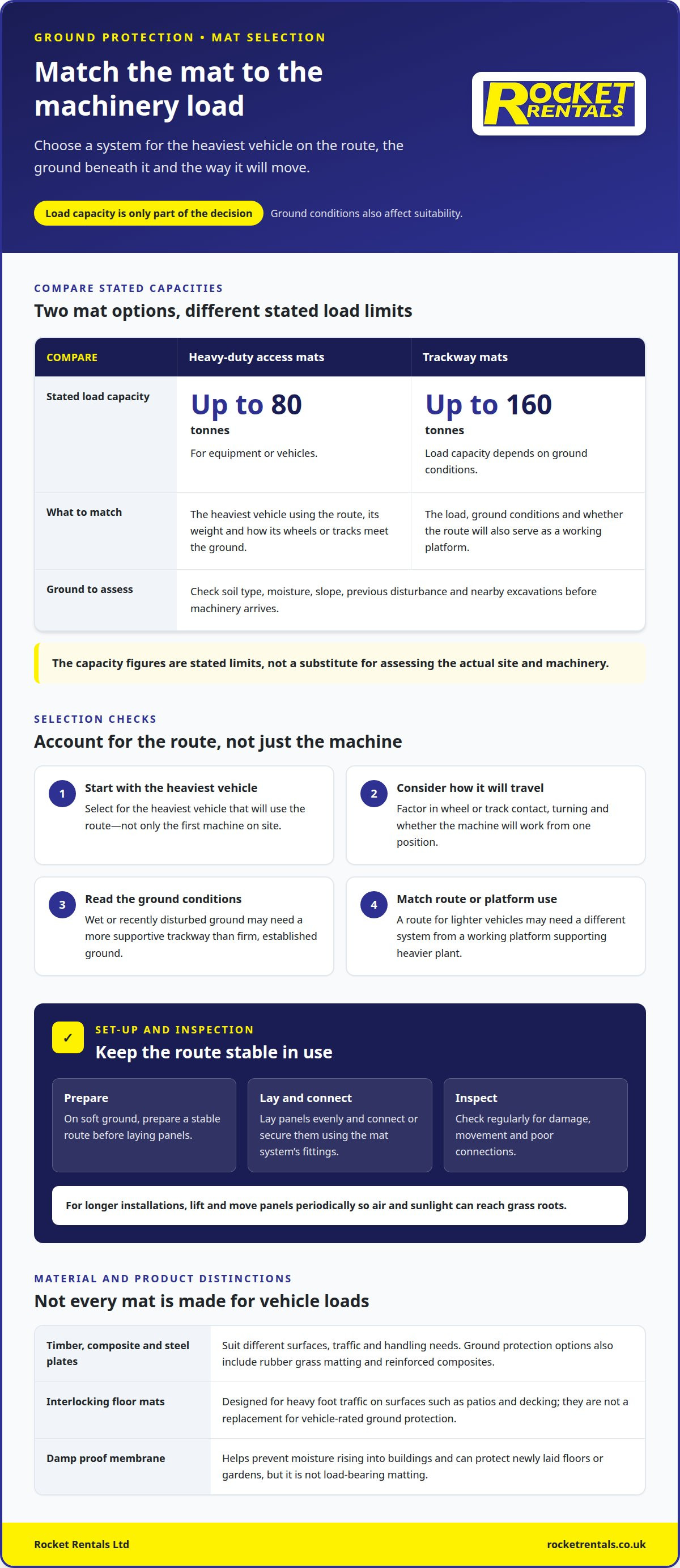
Ground condition and traffic weight guide mat selection, helping you protect soft soil, turf or uneven construction-site access. Wet or recently disturbed ground may need a more supportive trackway than firm, established ground. Heavy-duty access mats can support equipment or vehicles weighing up to 80 tonnes. Trackway mats are described for loads up to 160 tonnes, depending on ground conditions. For temporary trackway on soft ground, prepare a stable route, lay panels evenly and connect or secure them using the mat system’s fittings.
Selecting Mats for Machinery Loads
Choose matting for the heaviest vehicle using the route, not just the first machine on site. Consider the machine’s weight, how its tracks or wheels meet the ground, and whether it will turn or work from the same position. Match those demands to the mat’s stated load capacity and the site conditions. A route for lighter vehicles may need a different system from a working platform supporting heavier plant.
Comparing Mat Materials
Timber mats, composite mats and steel plates suit different surfaces, traffic and handling needs. Ground protection mats also come in materials such as rubber grass matting and reinforced composites. Some panels interlock to simplify installation and create a stable surface. Interlocking floor mats are designed for heavy foot traffic on surfaces such as patios and decking, not as a replacement for vehicle-rated ground protection. Damp proof membrane helps prevent moisture rising into buildings and can protect newly laid floors or gardens, but it is not load-bearing matting.
Assessing Ground Bearing Capacity
Ground bearing capacity is the ground’s ability to support plant loads without excessive settlement or failure. Before machinery arrives, assess soil type, moisture, slope, previous disturbance and nearby excavations. Compare these conditions with the machine load and mat capacity. On UK construction sites, applicable health-and-safety guidance and site risk assessments inform safe ground protection decisions. Inspect mats regularly for damage, movement or poor connections. For longer installations, lift and move panels periodically to let air and sunlight reach grass roots.
How ground protection mats prevent erosion and surface damage
Ground protection mats create a working surface between heavy plant and vulnerable ground. By spreading contact loads and limiting direct disturbance, they can reduce rutting, erosion and damage on construction sites.
Limiting Soil and Vegetation Damage
Mats cover sensitive ground, helping limit compaction and damage to grass or other vegetation. Without this barrier, repeated vehicle movements can press soil together, disturb roots and leave ruts that channel rainwater. Mats distribute traffic over a wider surface, reducing pressure on the ground below. Use them for temporary roadways or walkways where plant, vehicles or workers repeatedly cross soft areas.
Keep panels stable and inspect them during use. If mats shift or become damaged, passing traffic can impact the exposed ground. For longer installations, lift and move panels periodically so air and sunlight can reach grass roots.
Reducing Reinstatement Work
Preventing surface damage can reduce the area that needs attention after construction work ends. Less rutting may mean less levelling, soil replacement or reseeding along access routes. Ground protection mats can also help limit erosion and runoff that might carry loose soil beyond the work area. Plan coverage around vehicle routes and work areas, not only where machinery is parked.
After machinery leaves, inspect the exposed surface for compaction, standing water and damaged vegetation. If the ground is compacted or damaged, relieve compaction, replace displaced soil where needed, then reseed or replant affected areas. The right approach depends on the soil and extent of damage.
Mats also create firmer routes across uneven ground, reducing the chance of vehicles sinking or getting stuck. This can limit disruption to machinery and avoid further ground disturbance from recovery movements. A stable route is particularly useful where repeated traffic would otherwise deepen ruts or spread damage beyond the original path.
For construction projects involving planned machinery movements, explore construction machinery options alongside your ground protection plan.
Distributing machinery weight to prevent soil compaction
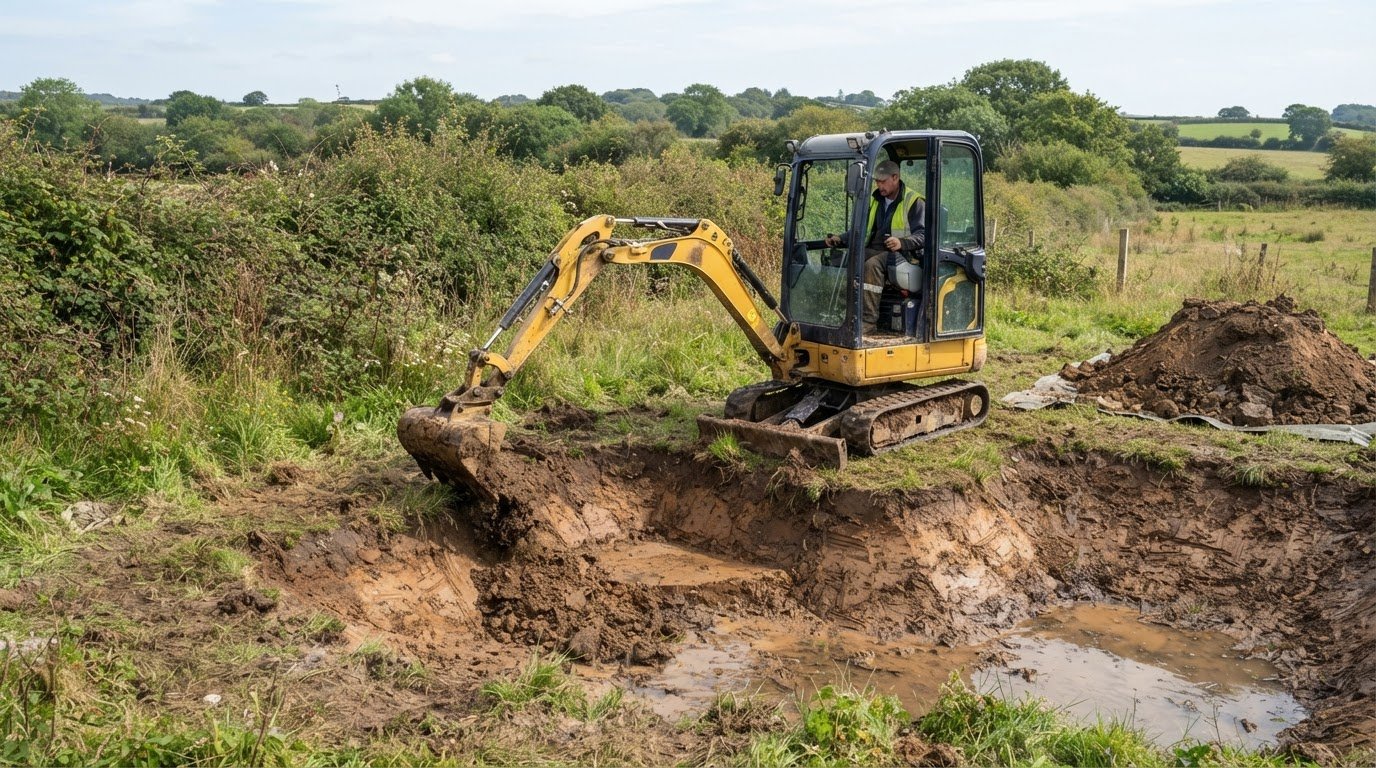
Track mats and panels spread plant weight over a broader area, reducing pressure on soil. If machinery sinks or forms deep ruts, it can disrupt pedestrian routes and disturb ground above underground services.
Spreading Machinery Weight
Weight distribution means transferring a machine’s load across more ground than its tyres or tracks contact directly. This matters on construction sites, where concentrated pressure can compact soil and restrict water movement. Mats create a wider supporting surface, helping machinery cross soft terrain without placing its full load on narrow wheel tracks. Interlocking panels can join to form a more continuous route or working platform.
For example, a temporary roadway made from connected track mats gives vehicles a defined path across soft ground. Keeping traffic on that route can limit repeated disturbance to surrounding soil and reduce erosion. A separate pedestrian walkway can keep foot traffic off vehicle routes, helping maintain a stable surface for both.
Avoiding Ruts and Service Damage
Ruts form when tyres or tracks press into soft ground, then deepen as vehicles repeatedly follow the same line. Mats help bridge uneven areas and spread loads, reducing the chance of machinery sinking and forming deeper grooves. This matters because uneven surfaces can affect vehicle movement and make access routes difficult to use.
Ground movement can also affect buried services. Heavy plant crossing disturbed soil may put pressure on the ground above underground utilities, while deep ruts can alter the surface around them. Use a protected route and working platform to make traffic more predictable, and avoid unnecessary movements over unprotected ground.
On a construction site, plan mat coverage for the machinery’s full working area, not just its access track. Turning, reversing and repeated passes can concentrate loads at route edges. A connected, stable surface helps distribute those movements and can limit rutting, compaction and surface erosion.
Reducing soil compaction and protecting drainage
Soil compaction squeezes pore spaces, making it harder for water to soak into the ground. Planning how to protect ground from heavy machinery means considering how temporary mats can spread loads and preserve soil structure beneath site routes.
This matters for drainage. Compacted wheel tracks can channel rainwater across the surface, carrying loose soil into nearby work areas or drains. Mat-supported routes help reduce pressure on the ground and limit conditions that contribute to compaction, erosion and runoff. Mats do not replace planned drainage, so keep existing flow paths clear.
Before laying temporary matting, identify where water naturally flows across the site. Avoid covering drainage channels or placing panel edges where they could obstruct flow. For example, a route crossing a low area should allow water to pass without collecting against the mats. After heavy rain, check for pooling, displaced panels and new channels in exposed soil.
Separate vehicle routes from pedestrian access where the site layout allows. Mats can provide a more stable surface for workers crossing soft or uneven areas, helping reduce the risk of falls. Keep walkways clear of turning points and areas where machinery repeatedly loads the ground. This also limits unnecessary foot traffic across exposed soil.
Assess the result by observing the ground around the protected route during and after use. Compare exposed areas with the ground beneath or beside the mats. Look for new ruts, standing water, washed-out soil or changes to existing water flow. These signs can show where the route or drainage plan needs adjustment before more construction work begins. A practical plan for how to protect ground from heavy machinery accounts for drainage as well as access.
For construction machinery to support your project, discuss your plant hire requirements.
Rocket Rentals
Rocket Rentals Ltd can help you plan the plant hire needed for work on ground protected by temporary mats. Matching equipment to the task and site layout helps you organise access routes and working areas before machinery arrives. Its mini digger hire, excavator hire and roller hire options support different construction activities, while welfare unit hire provides site facilities for your workforce. As a trusted, family-run business, Rocket Rentals Ltd offers a straightforward point of contact for project equipment needs across the UK. Ground protection mats remain essential for protecting vulnerable surfaces; plant hire supports the work taking place on them. Share your project requirements and the equipment you need, then contact Rocket Rentals Ltd to discuss your hire.
Plan your next site move with confidence
Planning how to protect ground from heavy machinery also means coordinating work with changing site conditions. A route that works before rain may need attention once the ground softens, and changes to machinery movements can expose previously protected areas. Include ground protection in the project plan alongside access, work areas and task sequencing, so equipment movements stay organised as work progresses.
Before the next phase begins, consider what machinery the work requires and where it needs to travel. Rocket Rentals offers plant hire for construction projects, including Mini Digger Hire, Excavator hire and Roller Hire. Matching equipment to the task helps you plan site activity around your ground protection arrangements.
For equipment to support your planned works, contact Rocket Rentals about your project. A clear plan gives you a confident starting point for the work ahead.
Frequently Asked Questions
How Do I Calculate the Number of Mats Required?
Measure the area you need to cover, then divide it by the usable coverage of one mat. For example, listed panel sizes provide coverage of 2.64 m², 2.88 m² or 2.99 m² per panel. Round up to a whole panel, then account for the route’s shape, turning areas and any working space beside the track. Interlocking layouts may also affect usable coverage.
Does Mat Size and Thickness Matter?
Yes. Mat size affects how much ground each panel covers and how easily the layout fits around corners, gateways or work areas. Thickness alone does not show whether a mat suits a machine: material, construction, ground conditions and rated capacity matter too. Check the mat’s specifications against the heaviest equipment using it, and consider handling and connection arrangements when planning the layout.
What UK regulations and guidance apply to ground protection for construction machinery
Applicable health-and-safety guidance and site risk assessments inform safe ground protection decisions. Assess soil type, moisture, slope, previous disturbance and nearby excavations, then compare these conditions with the machine load and mat capacity.
How to calculate the required thickness and load rating of ground protection mats
Assess soil type, moisture, slope and previous disturbance, then compare the machine’s load with the mat’s stated load capacity and the site conditions. This article does not provide a method for calculating mat thickness.

Comments