
Hiring a mini digger for garden work
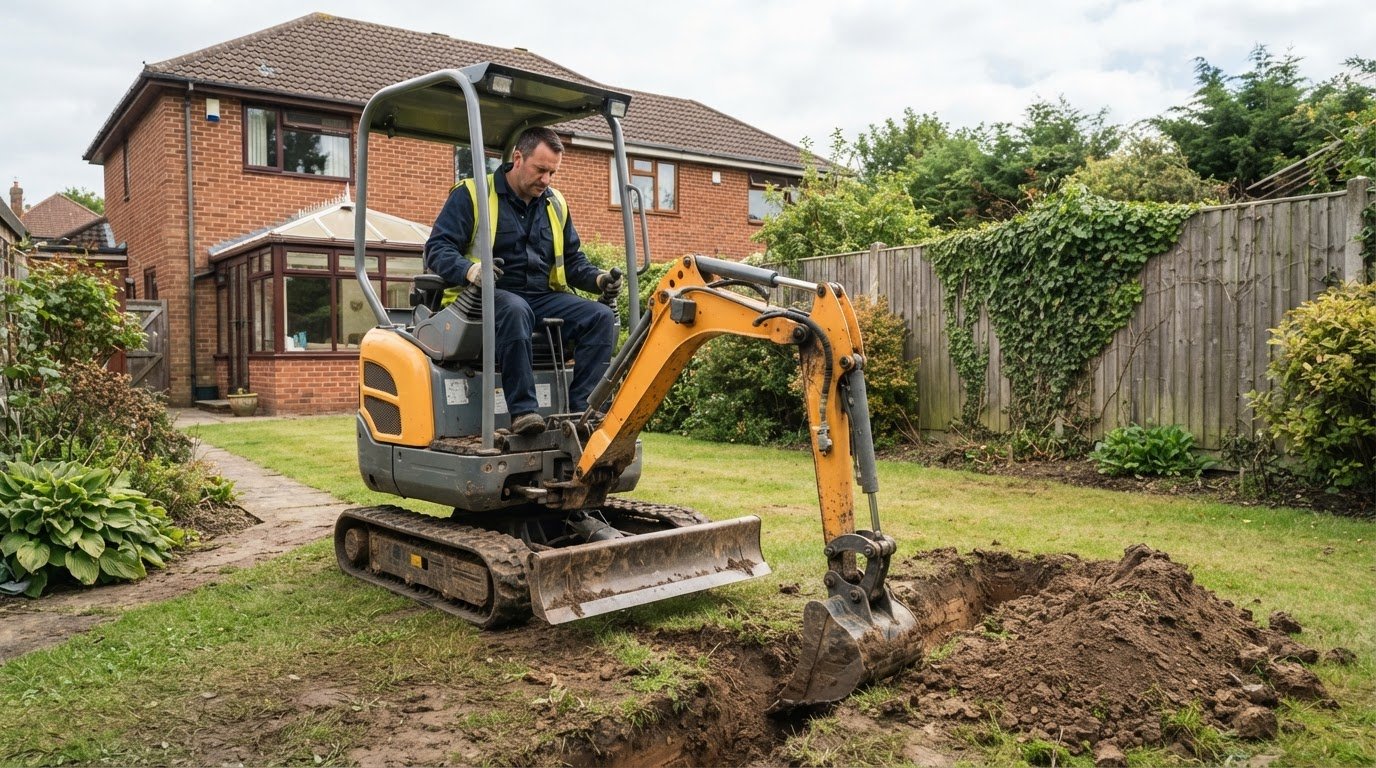
A garden project doesn’t always need a full-sized excavator. Hiring a mini digger for garden work can suit tasks such as digging a pond, clearing an old tree stump or preparing a driveway, provided the machine can reach the site and its digging depth is suitable.
A mini digger is a compact excavator designed for digging and moving soil in more restricted spaces. For example, the Komatsu PC14 is a 1.5-tonne excavator, while a Mini Digger 1.5T has a digging depth of 2.3m. The right choice depends on more than the size of the machine: access width, ground conditions and the work required all matter.
For garden or driveway work, assess access, digging depth and the scale of the task before arranging hire. Consider what a mini digger can do and how it fits into your project, so you can choose equipment suited to your site.
Table of Contents
What is a Mini Digger?
A mini digger is a compact excavator for digging and moving soil on smaller sites. For a garden pond, driveway trench or planting area, its smaller frame can suit restricted spaces better than a larger machine. A compact digger may suit smaller spaces, while a larger excavator may be better suited to more demanding work.
Mini and midi excavators differ in size and the work they can handle. A micro digger may suit a narrow route or lighter excavation, while a larger machine may be more suitable for substantial groundworks. Choose based on the task, available access and room to manoeuvre.
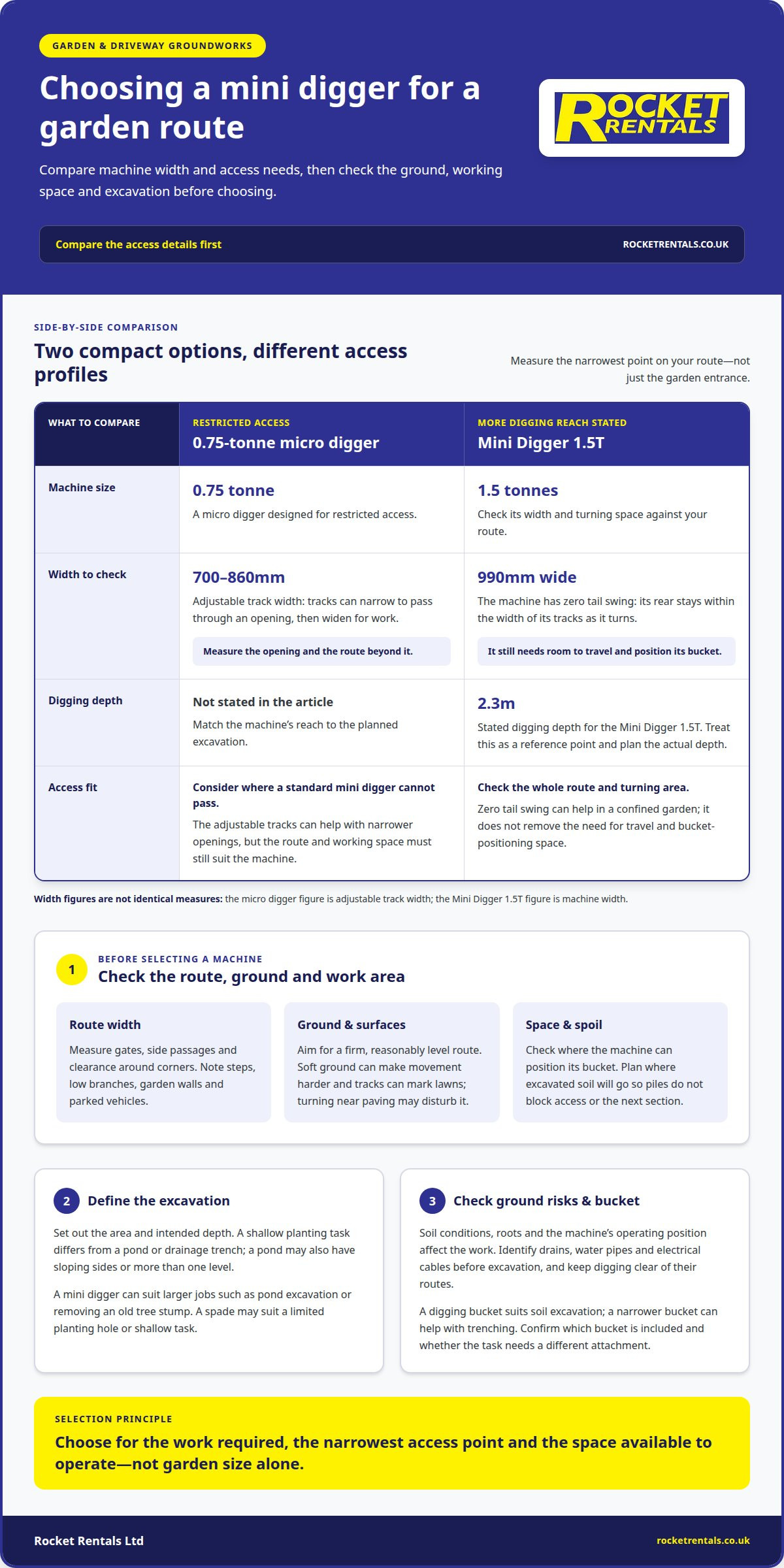
For a 0.75-tonne Micro Digger, the adjustable working track ranges from 700mm to 860mm. That change helps it pass through a narrower opening before widening for work. A 1.5-tonne mini digger is another option, but its width and turning space still need to suit the route into your garden.
Bucket options depend on the machine and hire terms. A digging bucket suits soil excavation, while a narrower bucket can help with trenching. Confirm which bucket is included and whether your task needs a different attachment.
A mini digger can be hired for a day or for a longer project. A short pond excavation may fit a day, while staged landscaping can take longer. Allow time in your programme for digging and related groundworks.
For small garden excavation, manual digging with a spade can suit a limited planting hole or shallow task. A mini digger is more appropriate when the work involves a larger area, such as removing a tree stump or excavating a pond.
Self-drive hire is available, but operating experience matters. Licence requirements depend on the work and setting, so there is no single answer for every garden job.
Near you, mini digger hire means finding a service that covers your postcode and can deliver a machine suited to the access route. A narrow entrance may rule out a wider excavator.
Consider lawns, paving, drains and fences before excavation. Tracks can mark soft lawns, and turning near paving may disturb the surface. Digging near drains risks striking buried pipes, while tight manoeuvres can damage fences. Map the work area and route before the machine arrives.
Digger access for back gardens and tight spaces
Getting a mini digger into a back garden depends on the narrowest part of the route. Measure gates, side passages and clearance around corners before choosing a machine. Note obstacles such as steps, low branches, garden walls and parked vehicles. A clear route helps establish whether a compact excavator can reach the work area without disturbing fences or paving.
A 0.75-tonne micro digger is designed for restricted access, and its adjustable tracks help it pass through narrower openings. Once inside, the tracks can widen for working. This makes a micro digger a practical option where a standard mini digger cannot pass, although the route and working space still need to suit the machine.
Compare this with a Mini Digger 1.5T, which is 990mm wide and has zero tail swing. Zero tail swing means the rear of the machine stays within the width of its tracks as it turns. That can help in a confined garden, but the machine still needs enough room to travel and position its bucket.
Before excavation, prepare a firm, reasonably level route and remove loose obstacles such as garden furniture, pots and branches. Soft ground can make machine movement harder and may leave marks on a lawn. Decide where excavated soil will go, too, so piles do not block the access route or prevent the digger from reaching the next section.
Preparation also means identifying buried services. Establish the routes of drains, water pipes and electrical cables before excavation, and keep digging clear of them. Marking known service lines gives the operator useful information about where extra care is needed.
For a machine suited to a narrow garden route, review the compact digger options alongside your access measurements.
Digger digging depth
Digging depth is the maximum depth an excavator can reach below ground level. A Mini Digger 1.5T has a digging depth of 2.3m. That gives you a useful reference for garden work, but the required depth depends on the job. A shallow planting bed differs from a deep drainage trench or pond excavation.
Start by defining the purpose and finished dimensions of the excavation. For a pond, consider its deepest point and any sloping sides. For a trench, establish the route and required depth. This gives the operator a clear target and helps determine whether the machine’s rated digging depth is suitable.
Rated digging depth is not the only practical consideration. The machine needs suitable ground and enough room to position itself beside the excavation. A fence, retaining wall or narrow garden path may restrict where it can sit. On a sloping lawn, the excavator’s position and stability also affect how effectively it can dig.
Soil conditions matter too. Loose topsoil differs from compacted ground or soil containing large roots. Removing an old tree stump, for example, may involve digging around its root system, while a straight trench follows a defined route. Different tasks may call for different bucket sizes and working approaches.
Before work begins, set out the excavation area and mark the intended finished level. Identify known drains and buried services, then keep digging clear of their routes. If the garden project involves several depths, such as a pond with a shallow shelf and deeper centre, explain each level clearly. The 2.3m capability of a Mini Digger 1.5T is a reference point, not a substitute for planning the actual excavation.
Matching the machine’s reach to the required depth helps keep the work controlled. The excavation plan, soil conditions and available operating position all inform the choice for a garden project.
Mini diggers for gardens and driveways
Mini diggers can support garden landscaping and driveway groundworks, from soil excavation to rubble removal. The right approach depends on the finished surface, the order of work and the space available for the machine.
Garden and driveway applications
In gardens, a mini digger can excavate soil for landscaping, trenches or a pond, and help remove an old tree stump. For driveways, it can clear debris, prepare the ground and level an area before further work. Define the work area and decide where excavated soil and rubble will go.
When hiring a mini digger for garden work, plan how the machine will move across the site. Tracking or turning on paving can mark the surface, so a clear route can reduce unnecessary movement. Separating reusable topsoil from rubble can also make later landscaping easier.
Safe mini digger hire for UK gardens
A hire provider should explain the machine’s controls, operating instructions and inspection findings before work starts. The handover should cover relevant machine hazards and how the excavator is suited to the planned task. For example, working beside a wall calls for clear guidance on positioning and movement.
Agree where people, materials and excavated soil will be kept while digging is under way. Keep the working area clear, and make sure the operator understands the controls and agreed work zone. If you are hiring a mini digger for garden work, include access, ground conditions and the planned excavation in the site briefing.
A clear sequence helps keep groundworks orderly. For a driveway, remove rubble before levelling; garden landscaping may require excavation before redistributing soil. Set out the work area and intended result before machinery arrives.
For garden or driveway groundworks, arrange mini digger hire suited to your planned excavation and site.
Rocket Rentals: Mini Digger Hire
Rocket Rentals Ltd provides Mini Digger Hire for garden and driveway projects where machine size and the planned work matter. Share details of the excavation and site so the hire can suit your project. For larger groundworks, Excavator hire may be a better fit; Roller Hire can support ground preparation.
Equipment inspection helps establish its condition before use. Consider this alongside the machine’s suitability for your site, including the working space and planned task. Rocket Rentals Ltd is a local, family-run business serving customers across the UK.
Contact Rocket Rentals Ltd to discuss mini digger hire for your project.
Turn your garden plans into a clear brief
Before arranging a mini digger hire for garden work, decide what a successful finish looks like. Consider where surplus soil will go, which areas must remain untouched and what work follows excavation. A clear brief helps prevent overlooked tasks from disrupting landscaping or driveway preparation.
A garden project may involve several stages. Fit excavation into the order of work, from ground clearance through to finishing. If plans change, review the work area and intended outcome before using the machinery. Clear decisions keep the focus on the result, rather than simply completing a dig.
Your next step is to explain the project scope and site to the hire team. Describe what needs excavating and how the area will be used afterwards. A focused conversation gives you a practical starting point for arranging suitable equipment. Discuss your garden project with Rocket Rentals Ltd and move your plans forward.
Frequently Asked Questions
What should I clarify about delivery and VAT before arranging mini digger hire?
Read the hire terms for how delivery, collection and VAT are handled. Rocket Rentals Ltd can explain the arrangements for your hire, including whether delivery and collection are included and how VAT is treated. Having these details together helps you understand the terms before setting a delivery date and preparing the site for the machine’s arrival.
What mini digger size is best for garden work and narrow access?
Choose the smallest machine that can complete the excavation, provided it can travel along the full route and work effectively. A compact model may suit a narrow side passage, while a larger digger may be better for heavier groundworks. Consider turning space, ground conditions and the volume of soil to move, not just the width of the garden gate.
What is included in mini digger hire, such as buckets, fuel and insurance?
Inclusions depend on the hire agreement, so don’t assume buckets, fuel or insurance are automatically included. Check the terms for the supplied bucket, alternative attachments, fuel arrangements and insurance. A narrow trenching job, for example, may need a different bucket from general soil excavation. Clear details help you plan and avoid surprises.
How do I arrange delivery, collection and access for a mini digger hire?
Provide the site location, preferred hire dates and a clear description of the machine’s access route. Include the entrance width, steps, tight turns and proposed unloading area. Agree delivery and collection arrangements as part of the hire, including a safe place to leave the machine. Keep the route clear on arrival and the collection point accessible.
How long should I hire a mini digger for typical garden projects?
Set the hire period around the full sequence of work, not just the time spent digging. Moving soil, working around landscaping and clearing the area can extend the programme. Allow time to prepare the site and finish the ground after excavating a pond or trench. The project scope and pace determine a suitable hire period.
Comments