
Equipment hire for house builders, from access to lifting
House building needs more than digging equipment: equipment hire for house builders can cover access and lifting, site preparation, material movement and excavation. The right mix depends on the work at each stage, from preparing the ground to moving materials around the site.
Hiring can help you avoid buying machinery you won’t use regularly, while giving you options for different project requirements. This guide explains which access, lifting, site-work and digging equipment can support house building and real estate projects, and what each type is suited to. You’ll also see how equipment fits into a site programme, so you can plan the right support for the work ahead.
Table of Contents
Access and lifting equipment hire
Plan access and lifting around the task, load and working area, such as moving materials to an upper floor. Equipment hire is available across the UK, with the right machinery depending on the work, site conditions and hire period.
Lifting and materials handling
Lifting and materials-handling equipment helps move loads around a housebuilding site, from palletised materials to items needed at height. Before arranging lifting equipment hire, identify the load, where it must go and the space available for manoeuvring. Heavy lifting accessories must suit the load and lifting arrangement. A compact site may need a different handling approach from an open plot with room for larger machinery.
Telehandlers for lifting
A telehandler can lift and move materials across a site, helping crews position supplies where building work is taking place. Telehandler hire is relevant when the task involves lifting as well as moving loads. Consider the load, travel route, ground conditions and destination before selecting equipment. These details help match the machine to the work, rather than choosing by size alone.
For smaller structural support tasks, a Strongboy supports loads of up to 340 kg and a span of up to 900 mm. These limits make the Strongboy a specific option for suitable work, not a substitute for a telehandler moving materials around the site. Match the equipment to the task and load before work begins.
For vehicles on site, UK Government says daily visual checks, regular inspections and servicing should follow the manufacturer’s instructions and the risks associated with each vehicle. This gives site teams a practical maintenance routine to plan alongside lifting operations and can help reduce avoidable downtime.
For each lift, define the load and destination first, then plan the route and choose suitable equipment. This step-by-step approach helps coordinate access, lifting and materials handling with the work underway.
Building and site works equipment hire
Site work can involve fencing, storage and machinery for changing tasks. A market equipment range lists 117 building and construction items, so define the job before selecting what to hire.
Site equipment and storage
Plan site equipment around how materials, tools and supplies will be stored between tasks. Keep frequently used items close to the work area, for example, and provide secure storage for equipment when crews leave. Temporary fencing and site barriers can mark boundaries and guide movement around active work zones. Include entrances, delivery routes and pedestrian access in the layout.
Construction site security also depends on how the site is organised. Position barriers to control access, and plan storage so equipment isn’t left obstructing walkways or vehicle routes. Site fencing and safety equipment should support the layout, separating work areas from access points where needed.
Hire choices and damage cover
Hiring suits equipment needed for a specific stage or occasional task; buying may suit machinery used regularly across projects. Compare expected use, storage needs and maintenance responsibilities before deciding. For damage cover, the hire agreement sets out the applicable terms, including any exclusions or excess. Read those terms alongside your site insurance arrangements before the hire begins.
Operating requirements and safety checks
Training or licence requirements depend on the equipment and task. Assign operation to someone competent with that machine, and follow its instructions and site procedures. Before use, inspect the equipment for visible damage, leaks, missing guards and control faults. Record issues and keep faulty equipment out of use until addressed. This helps identify concerns before work starts.
To arrange delivery and collection, give the supplier the site address, equipment needed, hire dates and access details. Include delivery routes and any site restrictions in your plan. A clear schedule helps coordinate equipment with the relevant work stage. Use equipment hire planning to organise the requirements for your project.
Diggers and excavators
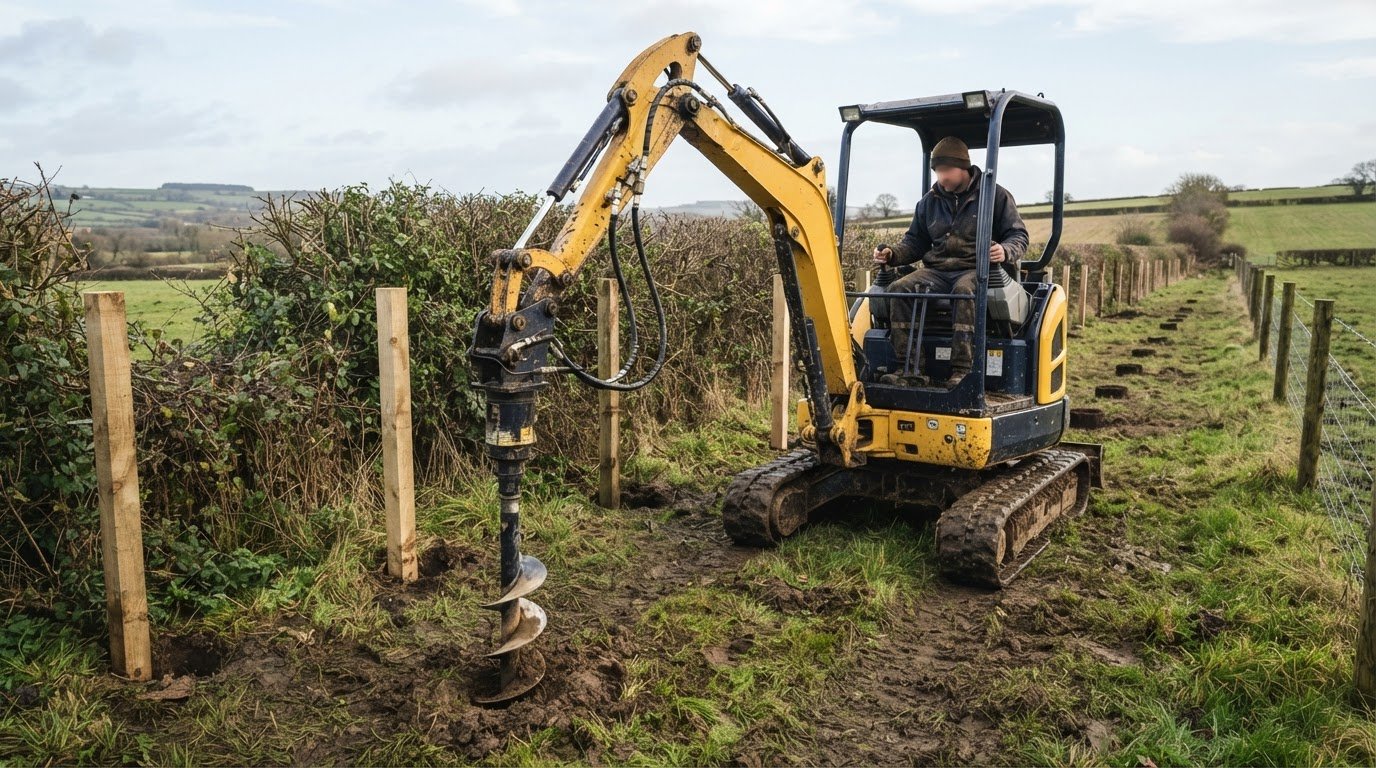
Diggers and excavators support groundworks such as foundation excavation, trenching and plot preparation. Choose equipment based on the task, available working space, ground conditions and where excavated material will go. For a house plot with limited room, a mini digger may suit smaller-scale digging; larger excavation work may call for a different machine. Match the machine to the work rather than assuming one size suits every stage.
Start by listing the tasks the machine must complete. A trench for drainage, for example, needs a different approach from clearing and levelling an area. Consider access to the digging area, the material being excavated and how spoil will be moved. These details help determine whether a mini digger or excavator is the practical fit.
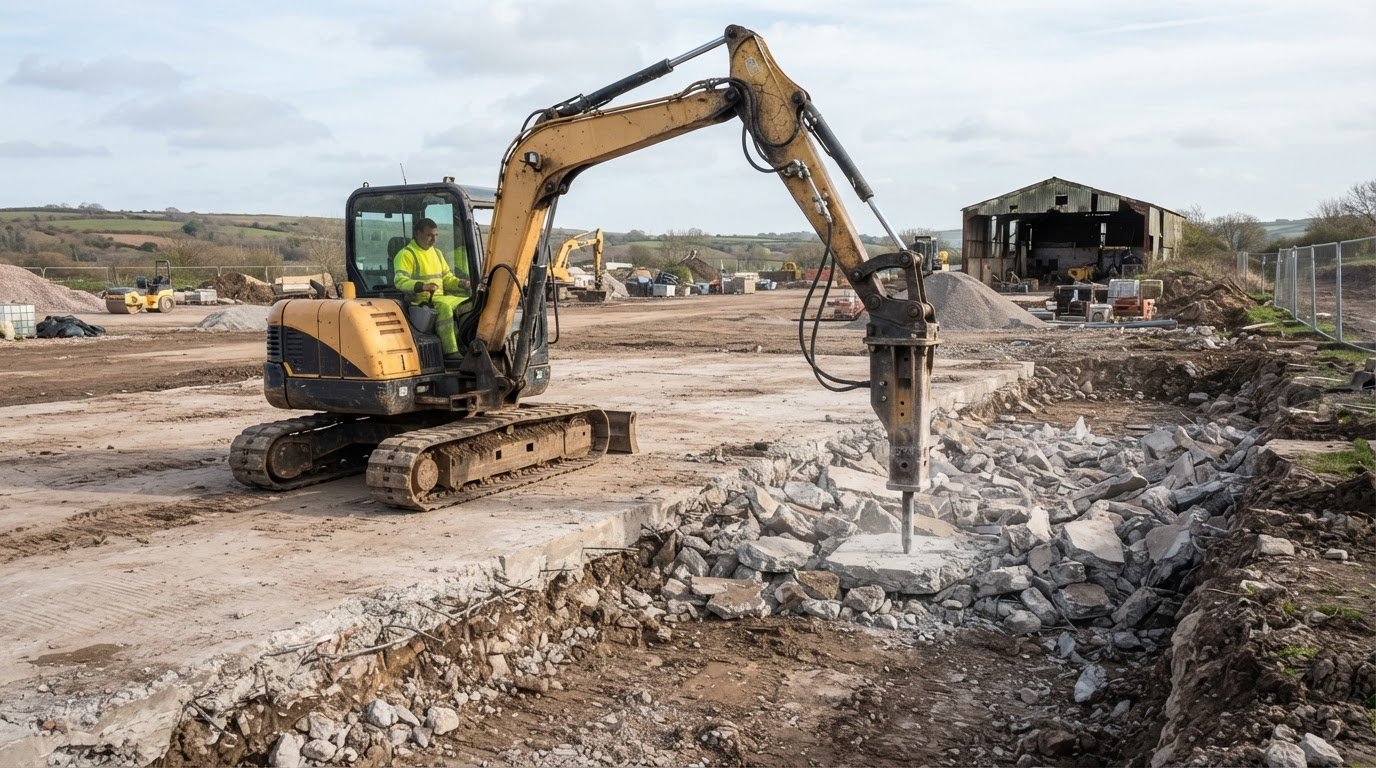
Attachments can adapt an excavator to different site tasks. Select one that suits the work, such as digging or breaking ground, and make sure it is compatible with the machine. Plan when attachments need changing, too. This helps crews avoid interrupting excavation while the required equipment is brought into position.
Ground conditions also shape the plan. Before digging, identify the work area and consider nearby structures, site access and the route for moving spoil. Keep the excavation sequence clear so machinery can work without blocking deliveries or other trades. For a house build, this could mean completing trenches before materials arrive for the next stage.
Excavators may also be used for lifting, but that requires specific safety provisions. UK Government says an excavator used for lifting must be thoroughly examined and fitted with additional safety devices, such as check valves and an audible warning device. Treat lifting as a separate planned task, not an assumed extension of digging. Choose the machine and attachments according to the work required, then coordinate excavation with the wider site programme.
Equipment hire for house building and real estate
House building and real estate projects need equipment at different stages, from preparing a plot to completing external works. UK plant hire companies offer machinery and site equipment for these tasks; availability depends on location, product type, hire duration and supplier coverage. Plan around the work sequence, so each item supports a defined task rather than taking up space unnecessarily.
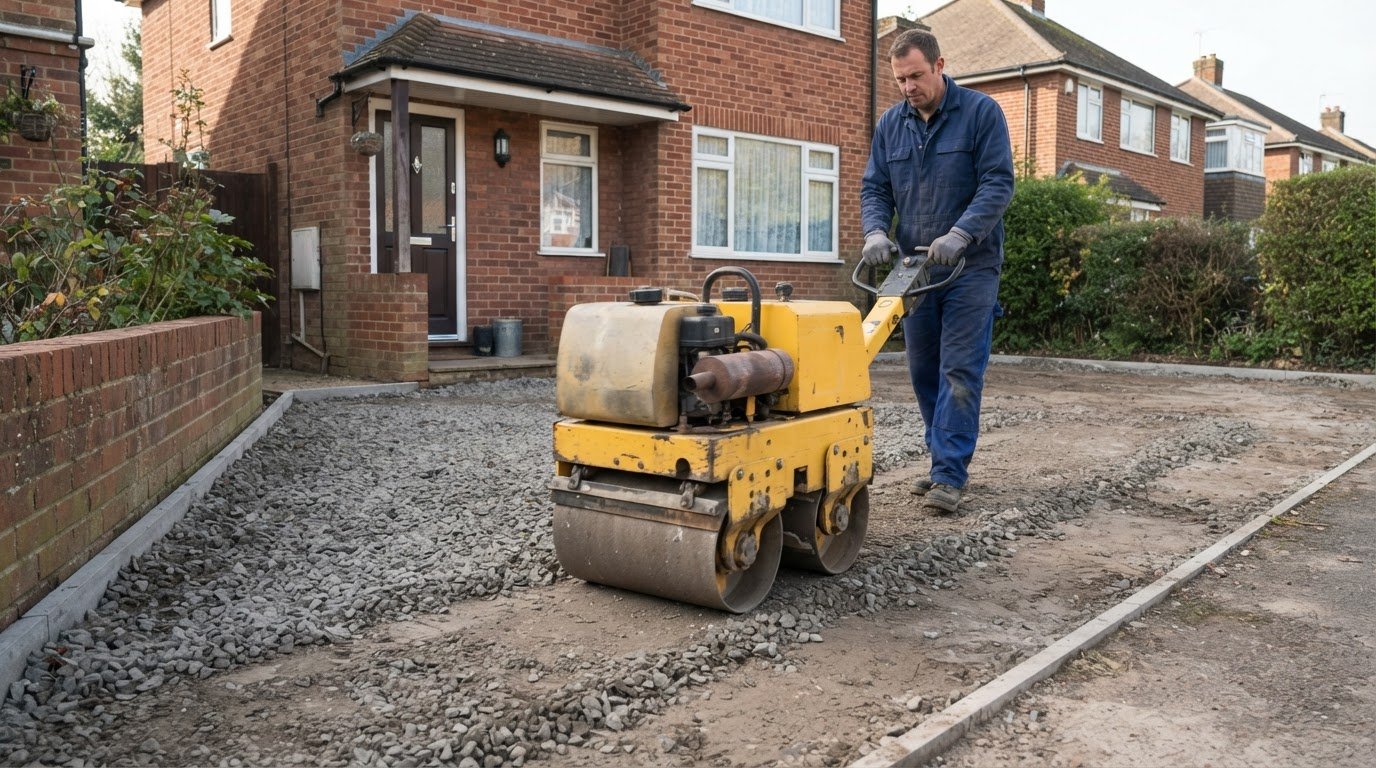
A project can move from ground preparation to foundations, drainage, building work and landscaping. Map equipment needs to those stages. Digging and moving materials may be central early on, while rollers can support ground preparation or finishing work. Welfare facilities support site operations as construction proceeds. This staged approach helps coordinate equipment with the work taking place.
Real estate work can also include refurbishments, extensions and external improvements, not only new house builds. A confined property may need compact machinery and a clear route through the site. A larger development may require equipment for several work areas. Consider access, storage, ground conditions and how trades will share the space. These factors shape equipment hire for house builders working across different project types.
Equipment ranges can be broad: one building and construction equipment range lists 117 items. The useful choice is the one tied to your site programme. Write down the task, work area and stage when equipment is needed. Group related requirements, such as excavation and ground preparation, to plan a practical sequence. This makes equipment hire for house builders easier to organise around the work each phase requires.
Site welfare should be planned alongside machinery, rather than treated as an afterthought. Include its position in the site layout, allowing access without obstructing deliveries, work areas or routes between trades. As the programme changes, review whether facilities remain practical for the active areas and whether they need to move with the work. Aligning welfare provision with the same sequence used for plant helps keep the site organised. Match the hire period to the project stages, and coordinate delivery and collection with site access arrangements. This keeps welfare equipment connected to the day-to-day needs of the build, refurbishment or external works.
Rocket Rentals
Rocket Rentals Ltd helps house builders plan plant hire around each project’s requirements. For ground preparation and excavation, you can arrange mini digger or excavator hire, with excavator attachments for suitable tasks. Roller hire supports site works, while welfare unit hire provides a practical facility for site operations.
Rocket Rentals Ltd supplies plant and site equipment for construction projects, including machinery and welfare facilities for specific project stages. Set out the task, site conditions and timing to make your requirements clear.
Contact Rocket Rentals Ltd to discuss equipment hire for your house-building project.
Plan your next project stage
Before the next stage begins, make equipment planning part of your project programme. Give the person coordinating site operations a clear view of upcoming tasks and when hired machinery will be needed. This keeps decisions connected to the build schedule.
For equipment hire for house builders, a concise project brief can set out the work, site access arrangements and intended hire period. Keep it alongside your programme so the team can refer to the same plan as dates or priorities change.
For support with planning equipment for your project, get in touch with Rocket Rentals Ltd. A clear brief is a good starting point for your next stage of work.
Frequently Asked Questions
What equipment do house builders commonly hire in the UK?
House builders commonly hire machinery for excavation, moving materials, ground preparation and site facilities. Options include mini diggers, excavators, dumpers, rollers, telehandlers and welfare units. For example, a builder preparing a plot might use a dumper to move material, then a roller for ground preparation. The right combination depends on the project stage, site layout and tasks planned.
What insurance and damage cover are included with construction equipment hire?
The hire agreement sets out the damage-cover terms, including any exclusions or excess. Read them alongside your site insurance arrangements before the hire begins.
Comments