
Digger hire prices in the UK for a week, weekend or day
A larger digger isn’t always the better fit. Choosing a machine for a week in the UK depends chiefly on its size and the work involved. A micro digger, a standard mini digger and a 3-tonne machine suit different jobs, so matching the machine to your site is a useful first step.
The machine itself is only one part of the decision. Hire duration, delivery and collection, fuel and insurance terms all affect how you plan the job and compare costs.
This guide explains what to consider when arranging digger hire for a day, weekend or week, including where a 3-tonne digger fits. You’ll also learn how to compare hire periods and choose a machine that suits your project.
Table of Contents
How Much To Hire A Mini Digger?
Machine size, hire duration and the agreement terms determine what to budget for digger hire. Compare like-for-like equipment and terms rather than relying on a starting figure alone.
VAT on displayed hire prices
Displayed starting figures for diggers and excavators may exclude VAT. Check whether VAT is added, and whether delivery, collection, fuel and insurance are included, before comparing hire options. For private-site operation, a driving licence isn’t required. A valid driving licence is needed to drive and operate a mini digger on public roads. Commercial projects may require CSCS or NPORS certification.
Weekly rates by machine size
Micro diggers typically weigh 0.8-1.5 tonnes, whilst mini diggers commonly weigh 1.5-3 tonnes. A 2-tonne machine falls within the mini digger category. Choose by considering access, digging requirements and the scale of the task, rather than weight alone. If you’re weighing up a week-long hire with an operator, the total depends on the number of booked days and the project arrangement.
Factors affecting hire prices
Machine size and booking length are key cost factors. A longer hire can work out differently per day from a short booking, while site access and the job itself help determine which machine is suitable. Compare delivery, collection, fuel and insurance terms too, and check whether the quoted figure includes VAT.
Regional weekly hire rates
Weekly hire terms can vary between UK regions, reflecting local supply and delivery needs. Compare like-for-like machine sizes and booking periods, then account for transport to your site. A micro digger for a restricted route and a larger mini digger for heavier excavation are different choices, so first identify the work and access conditions. This gives you a sound basis for comparing regional hire options.
VAT and possible additional charges
VAT, transport, fuel and insurance terms all affect the overall hire arrangement. Review the agreement so you know what applies to your booking.
Delivery and collection costs
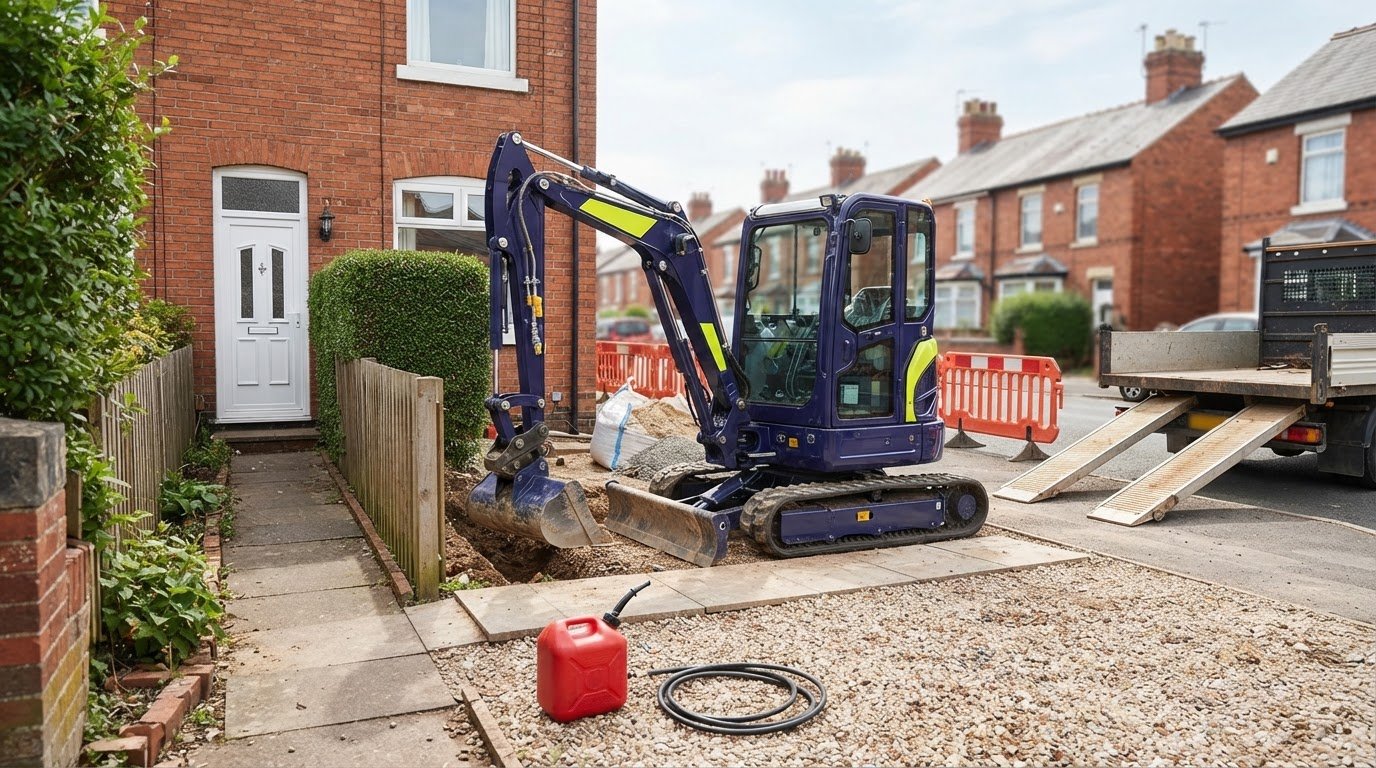
Delivery and collection cover taking the digger to your site and removing it afterwards. Check that both journeys are included in the booking details. Fuel is separate: find out whether the machine must be returned with a full tank and plan to refuel before collection. Returning it short of fuel may lead to fuel and handling charges.
Check how VAT is treated in the hire agreement. A displayed price may exclude VAT, so establish whether it will be added before comparing options. Record the VAT treatment alongside delivery, collection and fuel terms to see what the agreement includes beyond the headline figure.
Extra days, deposits and insurance
If the work exceeds the booked period, extra days may be charged at two-thirds of the daily hire rate. Allow enough time for excavation, clearing and returning the machine. If a delay seems likely, contact the hire company before the agreed return time to discuss an extension rather than assuming extra time is included.
The hire agreement sets out deposit and insurance requirements. Read the terms before booking, including the deposit, what the insurance covers, any excess, and whether theft-only cover or a damage waiver applies. Record these separately from VAT and transport costs. Keeping the return date, fuel level and cover terms clear can help you manage the hire from delivery to collection.
UK hire guide costs exclude VAT, delivery and collection, fuel, insurance, and an operator. Rates can rise 30-50%; 1.5-tonne diggers typically need around 25-30 litres of diesel.
Daily, weekend and three-day hire rates
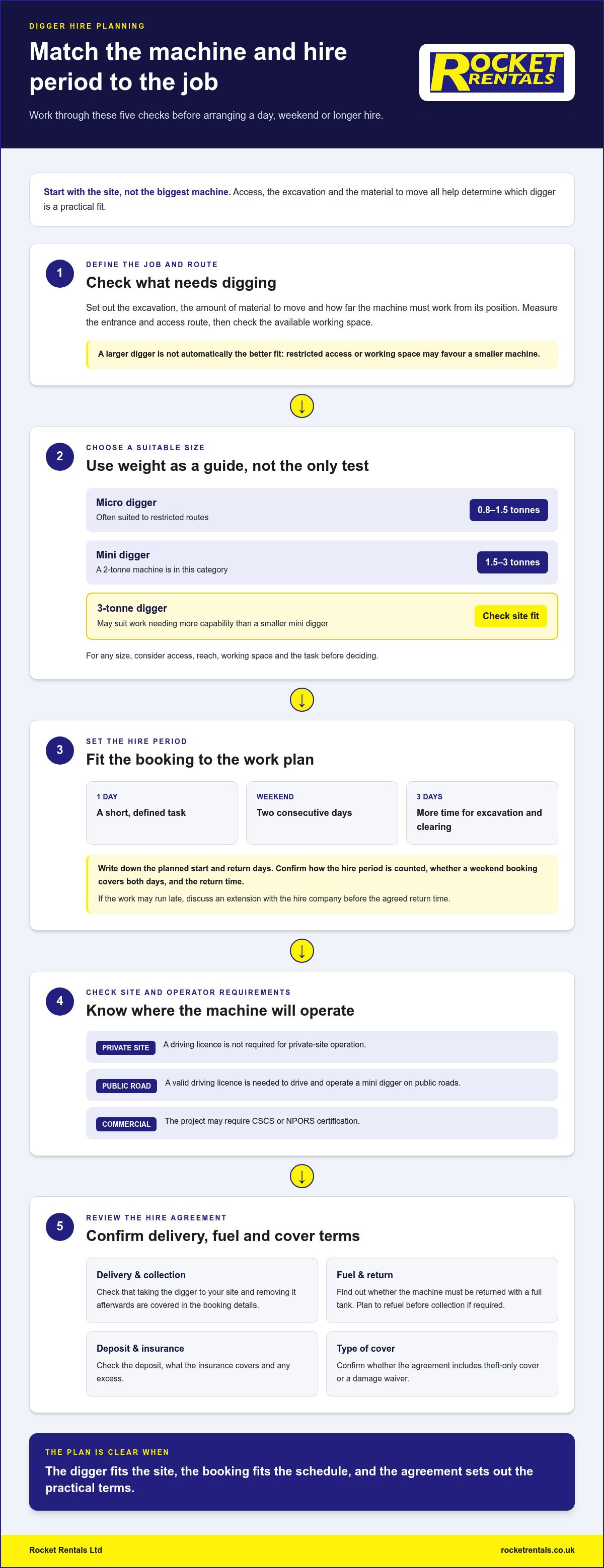
Choose a hire period that matches the work, rather than booking days you won’t use. Across the UK market, mini digger hire typically falls between £300 and £500 per week, with a median of about £375. That weekly range gives context, but it doesn’t set the daily or weekend rate for a particular machine.
A one-day booking may suit a short task, such as preparing a small area for a utility trench. A weekend hire can work for two consecutive days, while a three-day booking allows more time for excavation and clearing. Weekend rates may be higher than mid-week rates, so compare the cost of the full booking rather than assuming two days will cost twice one day’s rate.
Machine size also changes the comparison. A 1.5-tonne mini digger and a 2.8-tonne digger aren’t equivalent options: the larger machine may suit heavier work, but access and the task itself matter. For a garden project, consider the space available for the machine and the amount of material to move. The most useful comparison is between machines suited to the same job.
Before booking, note the planned start and return days. Compare daily, weekend and three-day terms for the same machine class, including how the hire period is counted. For example, if the job requires work on Friday and Saturday, check whether the weekend option covers both days or whether separate daily hire applies. Confirm the return time as well, since a late return may affect the terms.
Choose a hire period that matches the work plan: one day for a defined task, two days for a weekend job, or three days if the work needs more time. A clear schedule helps avoid paying for unused days while allowing enough time to complete the excavation or utility work.
3-Ton digger hire
A 3-tonne digger can suit work that needs more capability than a smaller mini digger. The trade-off is practical: the machine must fit the site, reach the excavation area and handle the material involved. Check access routes, working space and the task before choosing by size alone.
Typical weekly mini digger hire across the UK market ranges from £300 to £500. This is a broad guide, not a 3-tonne-specific rate. A larger excavator’s weekly hire rate depends on its size and hire terms, so distinguish it from a mini digger when comparing options.
For a 3-tonne job, start by defining what needs digging and how far the machine must work from its position. A narrow access route or restricted working area may make a smaller machine more practical. For a larger excavation, compare the machine’s suitability with the amount of material and the space available to move it.
Before booking, work through these checks:
Measure the entrance and route to the work area, including tight turns.
Set out the excavation area and identify any obstacles that limit machine movement.
Match the machine size to the depth and scale of the planned work.
Allow for delivery, collection and the full hire period in your project plan.
These steps help you decide whether a 3-tonne digger is proportionate to the job or whether another size is more suitable. If the work requires a mini digger, explore mini digger hire and choose around the site conditions and task requirements.
Rocket Rentals: Mini Digger Hire
Rocket Rentals Ltd offers mini digger hire for projects where a compact machine suits the site and excavation work. For larger machinery, excavator hire is another option, while roller hire can support ground preparation. Choose based on the task, site access and available space.
As a dedicated, family-run business providing nationwide coverage, Rocket Rentals Ltd places paramount importance on equipment inspection. This gives you a practical point to consider when planning plant hire and assessing the equipment for your job. Set out the work required and site conditions so you can discuss the most suitable option, whether you need a mini digger, excavator or roller.
To discuss equipment hire for your project, contact Rocket Rentals Ltd.
Plan your next step with confidence
Before arranging hire, note the work to be completed, site access and expected hire period. This gives you a clear basis for choosing equipment and discussing the terms. The cost to hire a digger for a week in the UK is most useful when considered alongside the wider project plan.
Rocket Rentals Ltd offers Mini Digger Hire, Excavator hire and Roller Hire for excavation and related site work. Decide which machine suits your task, then share your requirements when making an enquiry.
Contact Rocket Rentals Ltd about digger hire to discuss the equipment for your project. A clear plan is a practical start, and Rocket Rentals Ltd can help you take the next step.
Frequently Asked Questions
What is the average cost to hire a digger for a week in the UK?
For the cost to hire a digger for a week in the UK, a typical market range is £300-£500, with a median of about £375. Treat this as a guide for mini digger hire, not a fixed quote for every machine. The final figure depends on the digger’s size and the hire terms, so compare machines suited to the same work.
How do weekly mini digger hire prices vary by size and weight?
A 2-tonne model sits within the latter size band. For example, restricted access may favour a micro digger, whilst heavier excavation may call for a larger machine. Match weight and capability to the task before comparing rates.
Does digger hire price include VAT, delivery, collection, or fuel?
Hire figures may exclude VAT, delivery, collection, fuel and insurance, so don’t assume the headline rate covers them. VAT is often charged on top at 20%. For a useful comparison, separate the machine hire from transport and running expenses, then calculate the total for your site and planned hire period.
Is it cheaper to hire a digger for a week or for several days?
A weekly booking may cost less per day than a shorter hire, but it can cost more overall if the machine is unused for part of the week. Compare the total cost for the days you need with the weekly rate. If the work may run over, extra days may be charged at two-thirds of the daily rate, which can affect whether a longer booking suits your schedule.
What extra costs or risks should I budget for when hiring a digger?
Budget separately for transport, fuel and insurance, as well as any applicable damage or theft cover. Keeping these items distinct helps you account for costs beyond the hire rate.
Comments