
Digger bucket types and how to choose the right one
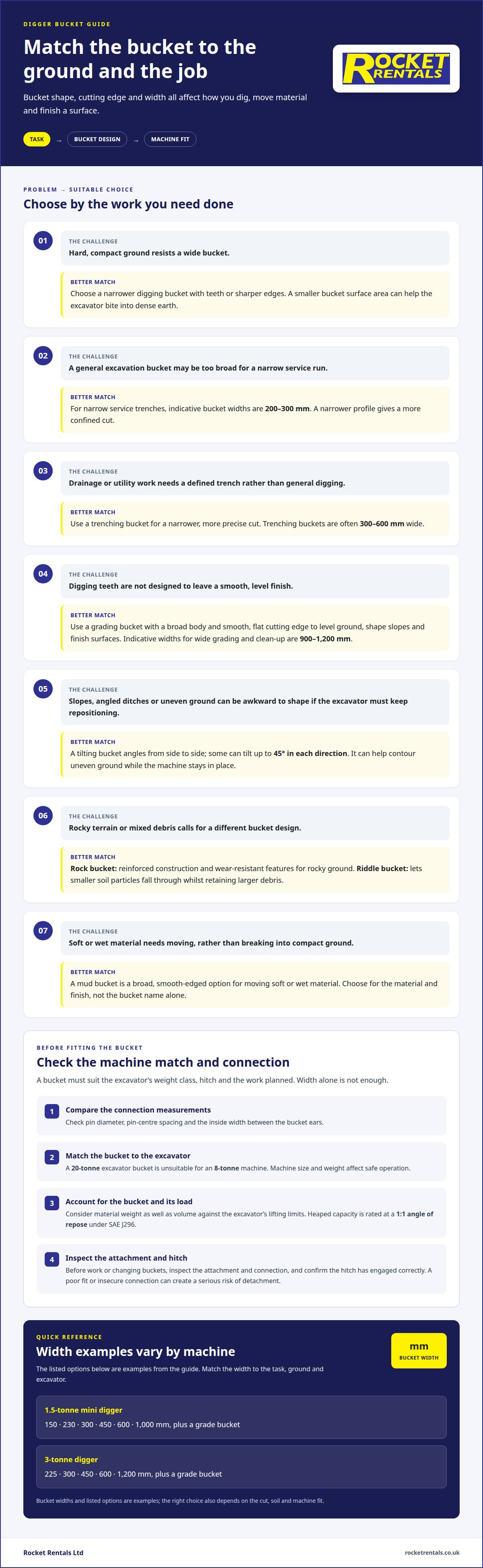
The widest bucket isn’t automatically the right choice. Match the bucket to the task, ground and excavator: toothed buckets suit digging where penetration matters, while a wide grading bucket with a smooth, flat edge is designed for levelling and finishing. The attachment must also fit the machine.
Choosing the right bucket can help you work efficiently and achieve the finish your job needs. This guide explains digger bucket types, how their designs affect digging and grading, and what to consider when matching a bucket to your excavator.
We’ll cover standard, trenching, riddle and grading buckets, then explain how attachments connect to the excavator and why compatibility matters. Understanding these differences will help you narrow down the right option for your site and the work ahead.
Table of Contents
Grading buckets
Grading buckets have a wide body and a smooth, flat cutting edge for levelling, shaping slopes and finishing surfaces. A grading or ditching bucket is useful when the excavator needs to spread material evenly rather than break into compact ground. For wide grading and clean-up, indicative bucket widths are 900 to 1,200 mm. The right width depends on the surface and the machine’s size.
What is the difference between a digging bucket and a trenching bucket? A digging bucket handles general excavation and loading, while a trenching bucket makes a narrower, more precise cut. Trenching buckets are often 300 to 600 mm wide, making them suitable for defined runs such as drainage or utility trenches. A grading bucket, by contrast, is shaped to level the surrounding ground or form a slope.
Operators use tilting buckets when a surface changes angle or the excavator cannot easily reposition. A hydraulic mechanism angles the bucket from side to side; some can tilt up to 45 degrees in each direction. This helps shape slopes, angled ditches and irregular terrain while the machine stays in place. A tilt-clean bucket combines that movement with a broad edge for grading and tidy-up work.
What are grading, ditching and tilting buckets used for? Grading buckets level ground and finish surfaces; ditching buckets shape channels and slopes; tilting buckets contour uneven ground without repeated repositioning. A mud bucket is another broad, smooth-edged option for moving soft or wet material. Choose by the finish and material, not the name alone. For example, a rock bucket has reinforced features for rocky ground, unlike a smooth-edged bucket designed for surface finishing. Check the cutting edge and width against the task: a broad bucket covers more ground, while a narrower profile offers more control in confined areas.
What Are Digging Buckets Used For?
A standard digging bucket is designed to break into soil, move material and load it elsewhere. Its teeth, width and capacity affect how it handles different ground conditions and tasks.
General digging and loading
A standard bucket has a curved back and durable teeth to help it cut into soil and clay. Its general-purpose shape suits digging, trenching and loading, allowing one attachment to handle several stages of an excavation job.
For example, use it to loosen earth, lift a bucketful and place the spoil in a dumper. Matching the bucket width to the machine and task helps maintain control during excavation and material handling. A bucket that’s too wide for dense ground can be harder to drive into the soil effectively.
Common digging bucket uses
General-purpose digging buckets move soil, clay, gravel and other materials around a site. They can excavate foundations for buildings, retaining walls and footings, or form trenches for water mains, electrical cables and fibre optics.
They can also clear topsoil, shape gradients in landscaping and load spoil into dumpers or skips. The teeth break into the ground, while the curved body carries material away. This makes a standard bucket useful for excavation and loading, but not for surface finishing.
In dense or rocky soil, a digging bucket with sharper teeth or edges can penetrate more effectively than one with a standard edge. Ground resistance matters: a smaller bucket surface area can help the excavator bite into hard, compact earth. A rock bucket has reinforced construction and wear-resistant features for rocky terrain, while a riddle bucket allows smaller soil particles to fall through as it retains larger debris.
Bucket width also affects the cut and the amount of material handled per pass. Indicative widths are 200 to 300 mm for narrow service trenches and 450 to 600 mm for general digging. A narrower bucket can form a more confined excavation; a broader one shifts more material. Choose around the task, soil and excavator, rather than width alone, to support efficient digging and spoil handling.
If your project needs excavation equipment, explore plant hire options for site work.
Digger Buckets Explained - Which is best?
The best bucket depends on the ground, task and excavator. Standard, trenching, grading, riddle and rock buckets suit different materials and cutting requirements.
Matching buckets to ground and tasks
Choose a bucket shape and cutting edge to suit the ground and task. For hard, compact earth, a smaller bucket surface can help the excavator penetrate; a wide grading bucket is suited to surface finishing. A trenching bucket creates a defined cut for utility work, while a riddle bucket lets smaller soil particles pass through. The right match affects control and material handling.
Bucket widths and excavator size
Bucket widths need to suit the excavator’s size and the required cut. For example, listed options for a 1.5-tonne mini digger include 150, 230, 300, 450, 600 and 1000 mm buckets, plus a grade bucket. A 3-tonne digger has listed widths of 225, 300, 450, 600 and 1200 mm, plus a grade bucket. These examples show why excavator weight matters, but width must also suit the task.
Matching buckets to excavators and hitches
Match the bucket to the machine’s weight class and hitch, then compare the connection measurements. Check pin diameter, pin-centre spacing and the inside width between the bucket ears. A 20-tonne excavator bucket is unsuitable for an 8-tonne machine; size and weight affect safe operation. Hitch type also determines how the bucket attaches and how operators change it. A quick coupler allows attachment changes without manual pinning.
Bucket capacity matters because the excavator must handle the bucket and its load. Heaped capacity is rated at a 1:1 angle of repose under SAE J296. Consider material weight as well as volume when assessing the load against the machine’s lifting limits.
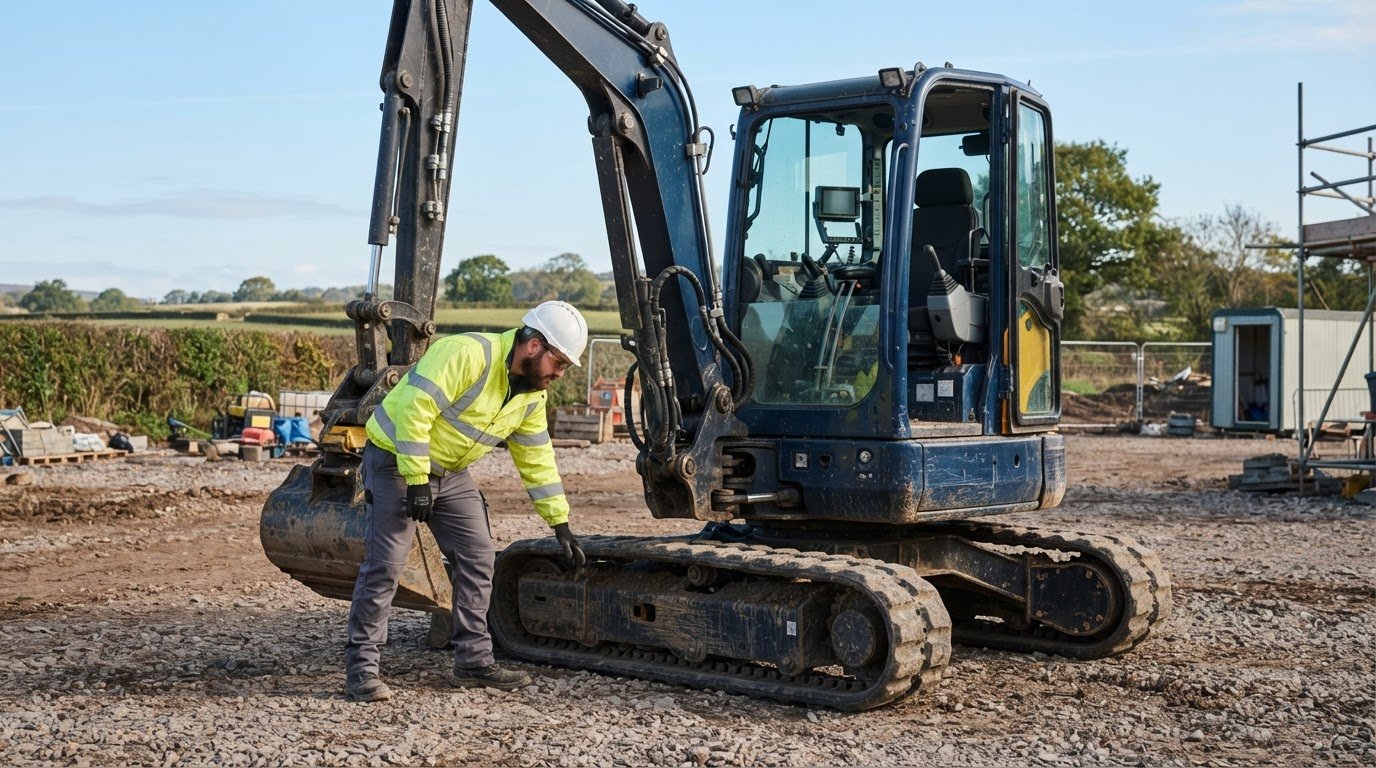
From the cabin, the right-hand joystick controls bucket movement: pull it left to curl the bucket, or push it right to extend it. Before work or changing buckets, inspect the attachment and connection, and make sure the hitch has engaged correctly. A poor fit or insecure connection can create a serious risk of detachment.
Digger bucket purpose and attachment
A bucket does more than collect soil: its shape affects how the excavator cuts, carries and places material. Choose the attachment for the result you need, such as a narrow trench, a screened pile or a clean surface. This keeps the tool suited to the task rather than treating every excavation as general digging.
A trenching bucket makes a narrow, defined cut for services such as drainage pipes or cables. A skeleton bucket, also called a riddle bucket, has gaps between its bars. Fine soil and sand fall through, leaving larger debris behind. This makes it useful for separating stones from soil, rather than carrying away an unsorted load.
Other attachments can transform the job. A ripper breaks hard ground, pavement or rock before excavation; an auger uses a rotating screw to drill holes for fence posts or piers. A hydraulic hammer delivers repeated impacts to break concrete or rock. These tools suit distinct tasks, so the attachment’s action matters as much as its connection to the machine.
The connection affects how an operator changes tools. A bucket attaches to the excavator arm through a hitch, and the hitch type determines how much manual work is involved. A quick coupler allows attachment changes without manual pinning. Hydraulic attachments connect through hydraulic lines, which provide power for tools such as hammers and augers. The attachment must suit both the task and the excavator’s connection.
For example, a clamshell bucket has two hinged sections that open and close. It can handle precise material placement, trench digging or pipe lifting. An ejector bucket pushes material out mechanically or hydraulically, helping release sticky clay. Selecting the right tool means considering the material, required finish and movement, then choosing a compatible attachment. Explore excavator attachments for equipment suited to your project.
Rocket Rentals Ltd: Mini Digger Hire
Rocket Rentals Ltd offers Mini Digger Hire for excavation work where a smaller machine suits the site and task. For larger excavation requirements, Excavator hire may be a better fit. The work also determines the attachment: narrow trenching, general digging and surface grading each call for different bucket designs.
Rocket Rentals Ltd also offers Excavator Attachments to help match equipment to the task. Before arranging hire, note the ground conditions, type of excavation, site access and whether you need to dig or grade. These details help you focus on equipment suited to the work.
If your project also needs ground compaction, Roller Hire is another option. Contact Rocket Rentals Ltd to discuss your plant hire requirements.
Plan your next excavation with confidence
Before work begins, map out the job sequence and note any site constraints that could affect how you organise the work. A clear plan gives your team a shared reference as the project moves from preparation to completion.
Use this guide to digger bucket types explained as a starting point, then record the decisions that matter for your job, such as the planned work stages and where materials will go. This makes it easier to brief everyone involved and keep the site organised.
With the preparation in place, you can begin excavation with a clear plan and a practical basis for the work ahead.
Frequently Asked Questions
How to choose the correct bucket for you?
Choose a bucket that supports the whole work sequence, not just the first cut. Understanding digger bucket types by task helps you see where each attachment fits, from excavation and spoil handling to final clean-up. If your job has separate digging and finishing stages, plan which tool you need for each. This can help you avoid using one bucket for work it’s poorly suited to.
What are heavy-duty and rock buckets designed to dig?
Heavy-duty buckets suit repeated work in resistant ground, while rock buckets are designed for rocky material. Consider whether you need to break into the ground or sort material after excavation. For example, if a site produces stone-rich spoil, a rock bucket can help separate larger pieces from soil. The better option depends on whether the main task is excavation or handling the material afterwards.
What bucket widths and capacities are available for mini diggers and excavators?
Widths vary with excavator class and bucket purpose. For example, listed options for a 5-tonne digger include 300, 450, 600 and 750 mm buckets, plus a grade bucket; an 8-tonne digger has listed widths of 300, 450, 600 and 900 mm, plus a grade bucket. Bucket capacity also depends on the design and material being handled, so select a size suited to the machine’s limits.
How do bucket teeth, cutting edges and profiles affect digging performance?
The condition of the teeth and cutting edge can affect how evenly a bucket cuts. Before work, check for missing teeth, uneven wear or visible damage to the cutting edge. These issues can make the bucket track unevenly or leave a rougher cut. A quick visual inspection can also reveal whether the attachment needs attention before precise excavation or surface finishing.
Which digger bucket is best for clay, rock, sand and general-purpose work?
No single bucket suits every material equally. If clay sticks during discharge, an ejector design can help push it out; for stone-rich ground, choose a bucket suited to handling rock. Sand may need screening if you want to separate particles. Understanding digger bucket types by material helps you plan attachment changes when ground conditions vary across a job.


Comments