
Choose a Trenching Bucket by Width, Depth and Reach
Choose a trenching bucket to suit the trench you need to dig, not simply the excavator you have. Knowing how to use a trenching bucket starts with matching its shape and width to the required profile, then accounting for digging depth, reach, loaded weight and machine compatibility.
It is easy to focus on width alone, but a bucket’s dimensions and design work together. Understanding how to use a trenching bucket also means recognising that the right size can support control, while an unsuitable size or weight can affect how the excavator handles the attachment.
This guide explains what a trenching bucket does and how its shape, teeth and wear protection relate to the job. It also covers how to assess width, depth, reach and ground material, and why the excavator, coupler and bucket must be compatible. Understanding how to use a trenching bucket helps you make a more informed choice for your project.
Table of Contents
Bucket geometry, teeth and wear protection
Define the trench profile before choosing a bucket. Its shape and cutting edge affect how accurately it follows that profile.
Bucket shape and tooth design
A trenching bucket is a narrow excavator attachment designed to remove soil along a defined line. Its width, side plates and cutting edge shape the excavation. Start by considering the space required for pipes, cables or drainage. A bucket that is too wide removes more material than necessary; one that is too narrow may not leave the required clearance.
Teeth concentrate force at the cutting edge to help the bucket break into firm ground. Their layout and condition affect how the bucket enters the soil and fills. Unevenly worn teeth, for example, can make the bucket cut inconsistently. Match the bucket’s shape to the intended trench profile, then consider the ground and tooth condition.
Wear protection and trench safeguards
Wear protection is fitted to vulnerable bucket areas to reduce damage from repeated contact with soil and abrasive ground. Inspect the cutting edge, teeth, side plates and any wear strips for cracks, looseness or uneven material loss. Damage can change how the bucket cuts and affect the trench profile, so address visible faults before continuing.
In the UK, trench excavation must follow applicable regulations and the project method statement. The method statement should explain how the work will address edge protection and collapse risks in the site’s conditions. Ground type, water and nearby loads can affect those risks, so choosing a bucket alone cannot safeguard a trench.
Treat excavation controls and attachment selection as separate considerations. The bucket shapes the cut; it does not support trench walls or protect people at the edge. Follow the excavator, coupler and bucket manufacturers’ instructions alongside the project method statement. This matters especially near existing services, structures or stored materials, which can affect the planned work and safeguards.
Before digging, compare the planned trench profile with the bucket’s actual cutting width and inspect its wear points. A damaged edge or teeth may produce a cut that differs from the intended shape. Choose a bucket suited to the profile, and plan trench safeguards for the site rather than relying on the attachment.
What is a trenching bucket?
A trenching bucket is a narrow excavator attachment for digging linear excavations, such as drainage runs or service trenches. It suits ground that the excavator can dig effectively; very compacted or rocky ground may call for an attachment designed for tougher excavation. The trench profile and soil conditions help determine which tool is appropriate.
Inspection and routine maintenance help keep the bucket in working condition. Before use, check the teeth, cutting edge, side plates and attachment points for cracks, loose components, uneven wear or material caught around the connection. Clear built-up soil to make damage or movement easier to spot. If a component is damaged, stop and follow the manufacturer’s instructions before using the bucket again.
Operate an excavator with a trenching bucket according to the machine and attachment manufacturers’ instructions and the project method statement. Set the excavator on suitable ground, position the bucket over the planned trench line, then lower it steadily and draw soil back in controlled passes. Lift spoil clear of the excavation and repeat along the line, keeping the cut aligned with the planned profile.
Safety checks should cover the bucket connection, the excavator’s condition, the work area and the planned trench safeguards. Keep people clear of the machine’s working area, and account for nearby services, structures and materials. Ground conditions may change as excavation progresses, so stop if water, instability or an unexpected obstruction affects the work. Follow the excavator, coupler and bucket manufacturers’ instructions, the project method statement and applicable regulations.
After use, clear soil from the cutting edge and inspect the attachment for new damage or movement. Record faults through the site’s maintenance process so the bucket is not returned to work with a known defect. Careful checks help keep it ready for the next trenching task.
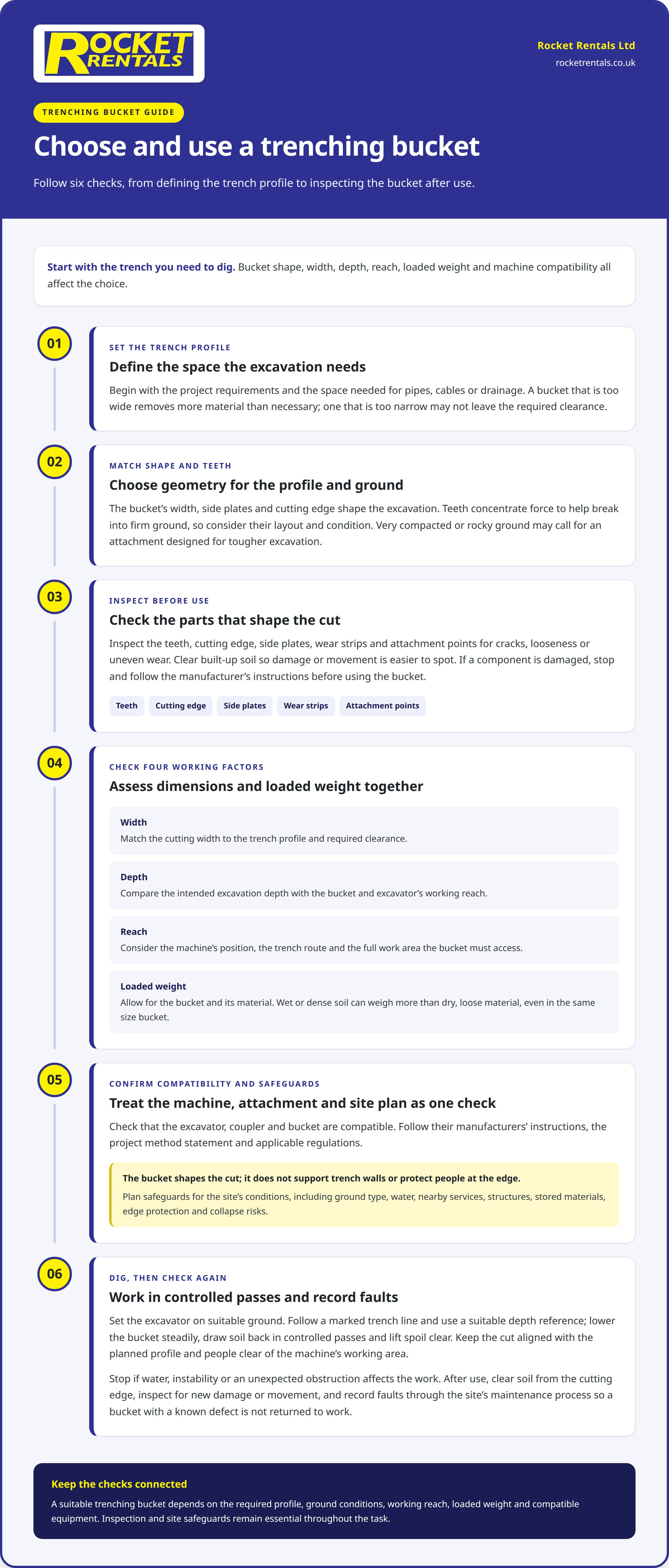
Bucket width, depth, reach and loaded weight
Match the bucket width to the trench profile, and ensure its depth and reach suit the excavator’s working position. A bucket that is too wide removes extra soil; one that is too narrow may not create the required profile. Set the target dimensions from the project requirements before selecting an attachment.
To dig a straight, level trench to the required depth and width, follow a marked trench line and use a suitable depth reference. Work in controlled passes, keep the bucket aligned with the line, and check the base and sides against the required profile as excavation progresses. These practical checks help you use a trenching bucket accurately.
Reach determines where the excavator can work from. Consider the distance between the machine and trench, and whether the bucket can reach the full work area without forcing an awkward position. Reach depends on the excavator’s design and working configuration, so assess it against the planned trench route.
Loaded weight includes the bucket and the material it carries. Wet or dense soil can weigh more than dry, loose material, even when the bucket is the same size. Account for these conditions when assessing how the excavator will handle a full bucket. Bucket dimensions alone do not determine whether a load is suitable.
Width: match the cutting width to the trench profile and required clearance.
Depth: compare the intended excavation depth with the bucket and excavator’s working reach.
Reach: consider machine position, trench route and the full area the bucket must access.
Loaded weight: allow for bucket weight and the type and condition of excavated material.
These factors interact. A wider bucket may collect more soil per pass, increasing the load when full. A long reach may also affect how the excavator handles that load. Assess the combination against the manufacturer’s instructions and machine limits instead of choosing by width alone.
Before work, compare the planned trench dimensions with the bucket’s cutting width and the excavator’s working range. Reassess the load as conditions change, especially if rain makes the soil wetter or excavation exposes denser material. This is an important part of using a trenching bucket appropriately.
Checking carrier and coupler compatibility
A trenching bucket must suit both the excavator, also known as the carrier, and its coupler. Check the machine and attachment manufacturers’ instructions together: a bucket that physically connects may still be unsuitable for the carrier. Consider the attachment’s weight and working limits alongside the excavator’s approved configuration.
To attach or detach a bucket safely, follow the specific instructions for the excavator and coupler. Keep people clear of the attachment, position it as directed and confirm the connection is secure before digging. To remove it, place the bucket in the instructed position and operate the release system as specified. Couplers differ, so do not use a sequence intended for another model.
Before digging in the UK, review available service plans and site information, then locate and mark underground services using suitable locating equipment. Include the findings in the project method statement and account for uncertainty in the planned excavation. A surface marker alone does not establish the precise position or depth of a buried service.
Compatibility involves more than the coupler pin or locking mechanism. Compare the bucket’s mounting arrangement with the coupler, and check that the excavator is approved to work with the attachment. A mismatch can affect how the bucket sits or moves, while an insecure connection can create a serious hazard. Do not adapt parts or bypass a locking system to fit an incompatible bucket.
Carrier: follow the excavator manufacturer’s instructions for attachment suitability.
Coupler: use its designated connection and release procedure.
Bucket: inspect the mounting points and locking interface before use.
Work plan: include service information and excavation controls in the method statement.
For trenching work, follow the excavator, coupler and bucket manufacturer instructions together with the project method statement and applicable regulations. If you need an excavator for a compatible attachment setup, arrange excavator hire for your project.
Rocket Rentals Ltd
Rocket Rentals Ltd is a national, family-run business that can help you plan the equipment side of a trenching job, from selecting suitable machinery to considering how an attachment fits the task. Its excavator hire, mini digger hire and excavator attachments can support decisions about equipment for your project. The right choice depends on the trench profile, ground conditions, required reach and compatibility.
Before arranging plant hire, have the project requirements ready, including the intended trench dimensions and work area. This helps you identify equipment suited to the job. Rocket Rentals Ltd also offers roller hire and welfare unit hire for other site requirements.
For help choosing equipment for your project, contact Rocket Rentals Ltd.
Plan your next trenching job
Before work begins, turn your equipment choice into a practical site plan. Define the work area, excavation sequence and spoil management. Ensure everyone involved understands the plan, including who will communicate changes. This connects the attachment decision to the wider job instead of treating it as a standalone choice.
Using a trenching bucket also means recognising when job requirements change. A revised route, different ground or a change to the intended trench can affect the equipment choice, so review the plan before continuing. Match the machine and attachment to the work actually scheduled.
If you need machinery for the project, Rocket Rentals offers Mini Digger Hire, Excavator hire and Roller Hire. Contact Rocket Rentals for help planning your equipment needs, and take the next step with a clear approach.
Frequently Asked Questions
What is a trenching bucket and what is it used for?
A trenching bucket is an excavator attachment designed to dig narrow, continuous excavations. It can create a route for drainage or a service duct, where a general-purpose bucket would remove more soil than necessary. Consider the installation when defining the trench profile, including the space required for the pipe or duct and surrounding material.
How do you choose the right trenching bucket size for a mini digger or excavator?
Choose a bucket that suits the required trench profile and is approved for the specific mini digger or excavator. For example, a drainage run with limited working space may need a narrower profile than a trench for a larger installation. Check the attachment and coupler against the machine manufacturer’s limits, including how excavated material affects the load.
Comments