
360 Excavator Hire in Yorkshire for Tracked or Wheeled Jobs
Buying a large excavator isn’t always the best fit for a project. 360 excavator hire can suit work that needs a capable machine for a defined period, without taking on the ongoing responsibilities of owning and storing it. The right choice depends on the work, site access and how long you need the machine.
It makes sense to want reliable equipment that can handle the job without adding complications. Hiring lets you match the machine to the task, whether you’re moving earth across an open site or working in a restricted space.
This guide explains when hiring a large excavator can suit a project and how to compare tracked and wheeled machines, choose a suitable weight class and plan delivery for a UK site. It also covers the site conditions and working requirements to consider when narrowing down your options.
Table of Contents
Why Hire a Large Digger Instead of Buying?
Hiring can suit a project that needs a large machine for a defined period, without the long-term commitment of ownership. Choosing the right excavator starts with the work, site access and required digging depth.
Choosing an excavator size
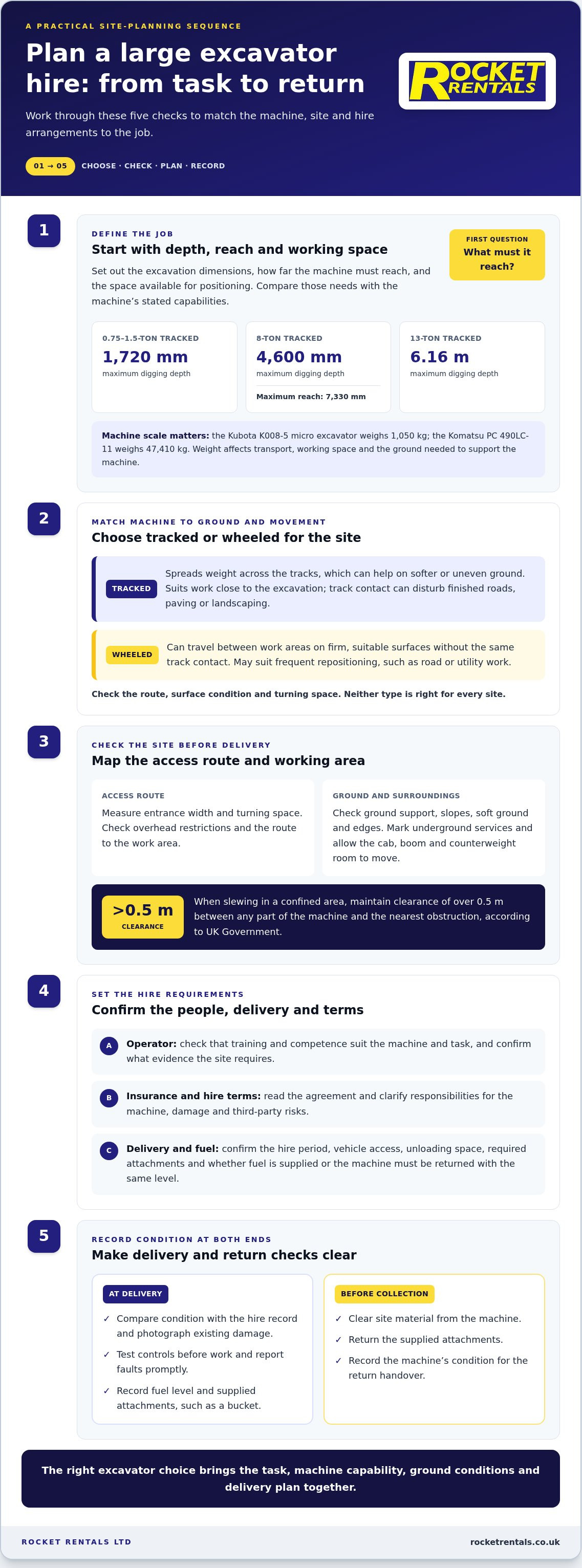
Excavators range from micro machines for restricted access to large diggers for demanding earthmoving. A Kubota K008-5 micro excavator weighs 1050 kg, while a Komatsu PC 490LC -11 weighs 47,410 KG. That difference affects transport, working space and the ground needed to support the machine.
For smaller tasks, the 0.75-1.5-ton tracked excavator has a maximum digging depth of 1720mm. A 13-ton tracked excavator reaches 6.16m. Compare the required depth, reach and site width before choosing mini or micro digger hire. Hiring can also avoid owning and storing a large machine between projects.
Insurance, safety and legal requirements
Choose an operator whose training and competence suit the machine and task. Site requirements may specify what evidence the operator needs to provide. Read the hire agreement to understand insurance responsibilities, including cover for the machine, damage and third-party risks.
At handover, inspect the machine, controls and visible condition, then report concerns before use. Keep the work area clear and plan movement around people, vehicles and structures. When slewing in a confined area, clearance of over 0.5m must be maintained between any part of the machine and the nearest obstruction, according to UK Government.
Hire period, delivery and fuel
The hire arrangements depend on the machine’s size, hire period and attachments required. Delivery planning depends on the site location, vehicle access and unloading space. Check the fuel terms too: establish whether fuel is supplied or the excavator must be returned with the same level.
Set out these practical requirements before confirming the hire. The hire period, difficult unloading access or a particular attachment can affect the arrangements. Clear details help align delivery and fuel planning with your project schedule.
Site access and ground conditions
Assess the entrance width, turning space, overhead restrictions and route to the work area. A micro excavator may suit a narrow route, while a larger machine needs more room for transport and positioning. Check that the ground can support the excavator and remains suitable as conditions change.
Allow space for the cab, boom and counterweight to move without striking nearby structures. Mark underground services and identify slopes, soft ground or edges that could affect stability. In confined areas, plan slewing around the required 0.5m clearance.
Delivery and return inspection
At delivery, compare the excavator’s condition with the hire record and photograph any existing damage. Test the controls before starting work and report faults promptly. Record the fuel level and supplied attachments, such as a bucket, to make the return condition clear.
Before collection, clear away site material, return the attachments and record the machine’s condition. These steps help make the handover clear at both ends of the hire.
Tracked and wheeled excavator fleet
Tracked and wheeled machines suit different routes, surfaces and working patterns. Compare how each will reach the excavation, move around the site and manage the task before choosing a fleet size.
Tracked or wheeled: match the machine to the site
A tracked excavator spreads its weight across the tracks, which can help it work on softer or uneven ground. Tracks also suit sites where the machine stays close to the excavation. However, they can disturb finished surfaces, so consider this when working beside completed roads, paving or landscaping.
Wheeled excavators can travel between work areas on firm, suitable surfaces without the same track contact. They may suit projects that involve frequent repositioning, such as road or utility work. Assess the route, turning space and surface condition first. Neither type is automatically right for every site.
Large excavator fleet sizes
Large machines are often described by operating weight, but that figure alone doesn’t establish whether an excavator suits your job. Check the digging depth, reach, bucket capacity and site constraints alongside weight. For example, reach and digging depth vary between excavator models.
These capabilities help frame the choice. Reach can matter when excavating from a fixed position, while depth matters for a deeper trench or foundation. Match the machine’s working range to the excavation plan, then consider transport access and positioning space.
What a 35-tonne class means in practice
A 35-tonne excavator sits among heavy machines intended for substantial earthmoving, but exact operating weights vary by model and configuration. The Komatsu PC 360LC-11 has a listed weight of 36,360 KG, giving a concrete example close to that class. It is not exactly 35 tonnes, so compare the machine’s stated weight rather than relying on the class label alone.
A heavier machine may suit large-volume excavation, but the site must accommodate its delivery, positioning and working area. Consider ground conditions, access and required reach before selecting a machine. Match these factors to the project’s actual scope rather than simply choosing the largest available option.
For a project requiring a larger machine, excavator hire can be a practical route to equipment suited to the task. Specify the surface, access route, excavation depth and expected working pattern when planning your choice.
Smaller tracked machines can be assessed against confined access and task limits. The 8-ton tracked excavator has a maximum digging depth of 4600mm and a maximum reach of 7330mm, figures to compare with planned excavation dimensions. For a higher-capacity option, the 13-ton tracked excavator has a maximum bucket capacity of 0.89m³. Consider those measures together with where the machine must work, rather than selecting by operating weight alone.
Where access is particularly tight, the 0.75-1.5-ton tracked excavator has an overall width of 700 to 860mm and a maximum reach of 3020mm. Check that width against the route and working area, and confirm that the available reach suits the task. Comparing these dimensions and capacity with the excavation plan can help narrow the fleet choice while keeping site access in view.
Excavator hire by weight class
Choose a weight class by matching the machine’s capacity to the work, site limits and ground conditions. A mini, midi or full-size excavator may suit a different combination of digging depth, reach and available space.
Comparing excavator weight classes
Weight gives you a useful starting point, but it doesn’t tell the whole story. A Kubota KX027-4 mini excavator weighs 2,590 kg, while a JCB 3CX excavator weighs 7,725 kg. Compare those figures with digging performance, transport needs and the available working area.
Specifications help show what each class can achieve. A 3-ton tracked excavator has a maximum digging depth of 2820mm and maximum reach of 4740mm. A 5-ton tracked excavator reaches 6120mm and digs to 3875mm. The larger machine may suit deeper excavation, but access and positioning still matter.
For heavier work, a 22,260 KG Komatsu PC210-11 offers a different scale from compact machines. A 23,460 KG Komatsu PC 228USLC-11 is another example in this range. Compare stated operating weights rather than relying on broad labels, which can cover machines with different dimensions and capabilities.
Consider the work volume as well as the task. Moving bulk material across an open site, preparing foundations and demolition can place different demands on reach, bucket capacity and machine stability. Choose a class that matches the expected output and available space without making access or positioning difficult.
Choosing mini, midi or full-size
Choose a mini excavator when access or working space is restricted and its digging capacity suits the task. The Kubota K008-3 micro excavator weighs 980 kg, while the Kubota KX027-4 weighs 2,590 kg. This difference can affect transport and manoeuvring, so assess the route and working area.
A midi machine can bridge the gap between compact access and greater digging capacity. Use the required reach and depth to judge whether that middle ground meets the project’s needs. Smaller machines can take longer to complete work when their capacity is below what the task requires, according to UK Government.
Full-size excavators suit larger-scale work where their reach and capacity can be put to use and the site can accommodate them. Compare excavation dimensions, the daily work plan, ground conditions and access before choosing a class. Demolition, for instance, may need different reach and attachments from trenching on the same site.
Write down the required depth, reach, material and access constraints before choosing. These details help you compare specifications on equal terms and select a machine that fits the work, rather than choosing by weight alone.
Excavator hire coverage across Yorkshire and nearby areas
For any UK project using 360 excavator hire from Rocket Rentals Ltd, start with the exact site postcode and access instructions. A clear location helps plan the route and identify the right entrance, especially when a site has separate gates for visitors, deliveries and construction traffic. Include the site contact and entry arrangements in your equipment brief.
Check the full route from the public road to the working area. Note narrow lanes, sharp turns, temporary roadworks and gates that could restrict the delivery vehicle. For example, a rural construction site may have a long access track, while an urban project may require entry through a managed compound.
Plan the unloading point before the excavator arrives. Identify a firm, level area with enough room for the transport vehicle and a clear route to the work zone. Include any soft ground to cross or overhead services to pass beneath in the site plan.
Height can affect access at several points along a route. Check gateways, covered loading areas, branches and overhead structures against the transport dimensions of the chosen excavator. An entrance that appears wide enough may still have a height restriction or tight turn that prevents straightforward access.
Prepare a short access brief for each job instead of relying on a general site description. Include the postcode, directions from the main road, surface conditions, unloading position and any entry restrictions. Photographs of a difficult gate or approach can help clarify the route for the delivery team.
For projects involving multiple sites, plan each location separately. The route and unloading area may differ between sites, even when they are part of the same contract. Record the order of locations, the equipment needed at each and the intended drop-off point to keep the plan clear.
Before finalising the hire arrangements with Rocket Rentals Ltd, review the access brief alongside the machine’s transport dimensions and site layout. This helps identify practical issues before delivery is scheduled. Accurate directions and a prepared unloading area also help the site team coordinate the equipment’s arrival with other planned work.
Excavator and mini digger hire
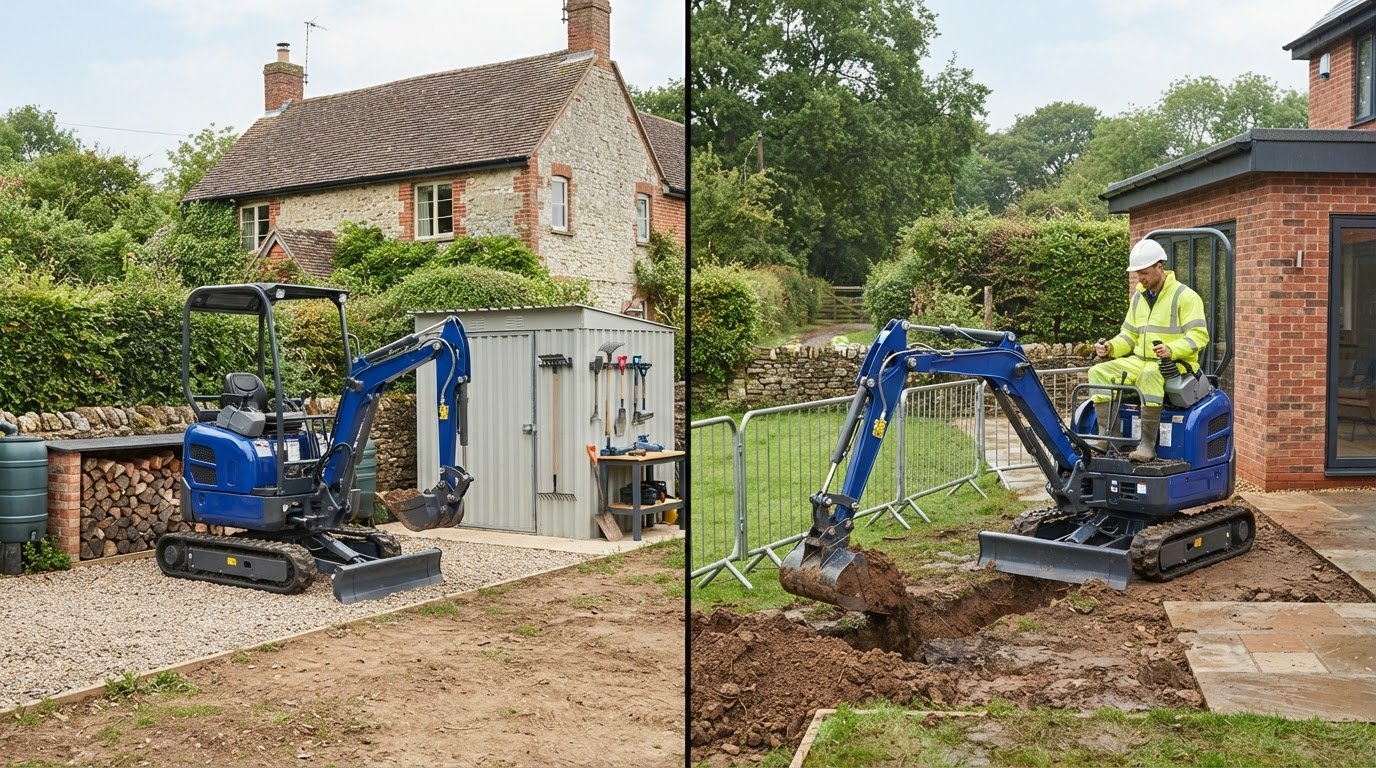
Mini and micro diggers suit focused work where access or working space is restricted. Larger excavators suit jobs that need greater reach or digging depth. Match the machine to the task, not just the label: compare its dimensions and stated working range with the site and excavation plan.
The Kubota K008-5 micro excavator is 700 mm wide, with a reach of 3.0 m and digging depth of 1.7 m. Those specifications help you assess whether it can pass through the entrance and reach the excavation from a suitable position. Measure the narrowest access point before selecting a machine.
For a task needing more reach, the Kubota U10-3 micro excavator has a reach of 3.3 m. The extra reach can change where the machine needs to sit, but it doesn’t replace checking digging depth. Set out the required working area first, then compare each model’s specifications against it.
Mini excavators cover a broader range of tasks and sizes. The Kubota KX015-4 has a digging depth of 2.2 m, while the Kubota U27-4 reaches 2.8 m. These examples show why “mini” alone doesn’t define performance. Use the planned trench or foundation depth to guide your comparison.
Consider the surface and manoeuvring space as well as the excavation dimensions. A compact digger may fit through a narrow garden entrance, but the boom and bucket still need room to work. On a site with restricted access, map the machine’s route and working position before arranging digger hire.
Electric options can suit projects where power supply and site conditions support them. The 1.9-ton electric tracked excavator has a maximum digging depth of 2.81m. The Sany SY19E electric mini excavator can charge using a 240v domestic supply in 9 hours. Check whether the charging arrangement fits the work schedule.
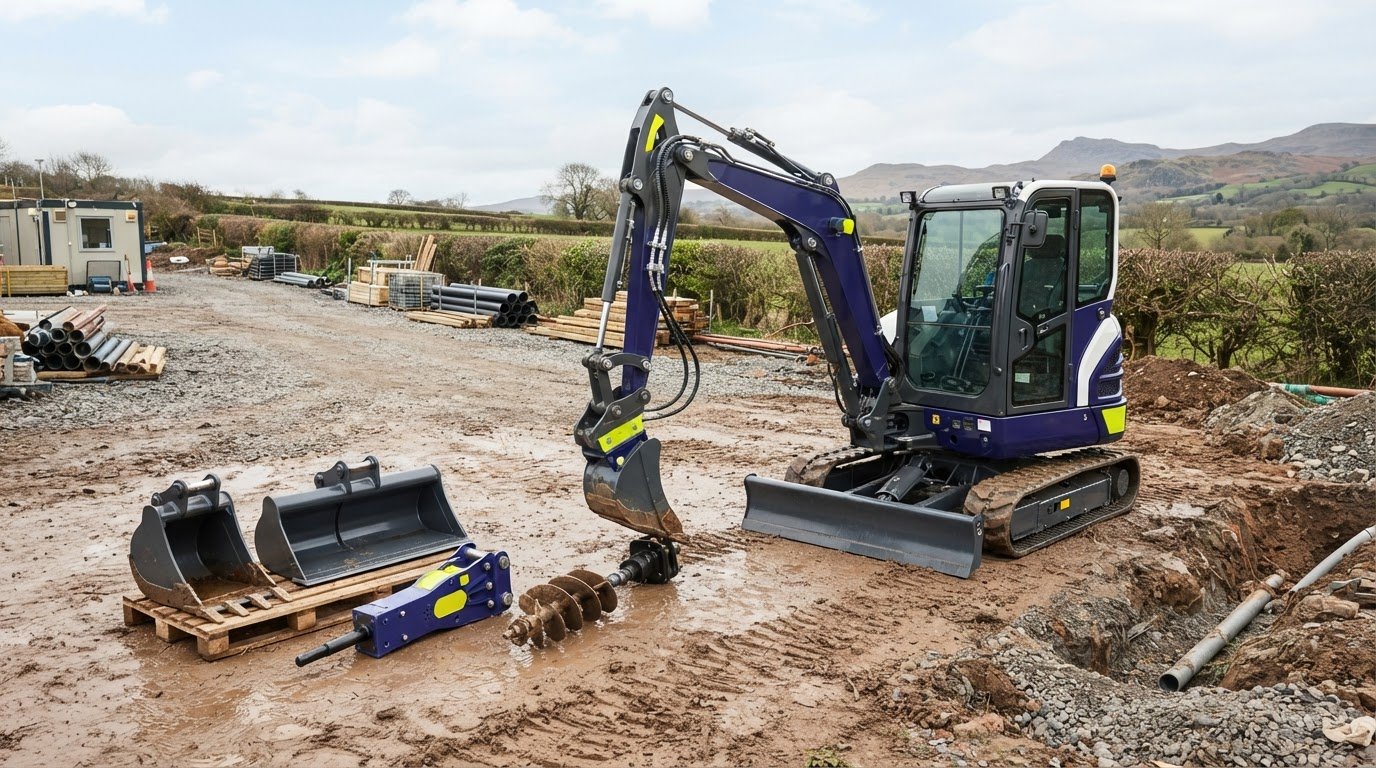
Attachments also affect what a machine can do. Match the attachment to the material and task, such as selecting a suitable bucket for excavation. An attachment changes the tool at the end of the arm, so confirm it is compatible with the chosen machine and the job.
Before deciding, write down the access width, required digging depth, reach and task. Compare those requirements with the Kubota K008-5, U10-3, KX015-4 or U27-4 specifications. This simple process helps you avoid choosing a digger that cannot reach the work or manoeuvre into position.
Ready to match a machine to your project? Explore excavator and mini digger hire for options suited to your site and task.
Rocket Rentals: Mini Digger Hire
Rocket Rentals Ltd offers mini digger hire and 360 excavator hire for projects that need a machine matched to the work. Consider these options after assessing access, required digging depth and operating space. Sharing those details helps identify a suitable machine for the task.
For work that also needs ground compaction, roller hire may suit the project. Welfare unit hire can support site facilities. When arranging plant hire, inspecting the equipment is another practical step to assess its condition before work begins.
Set out your site requirements and planned work, then contact Rocket Rentals Ltd to discuss suitable hire options. Visit rocketrentals.co.uk to get in touch.
Plan your next excavation with confidence
Before arranging 360 excavator hire, turn your job notes into a clear equipment brief. Describe the work, access route, ground and attachments needed. This gives you a practical basis for discussing the machine and hire terms that suit your project.
Rocket Rentals Ltd offers Mini Digger Hire and Excavator hire for excavation work, alongside Roller Hire when ground compaction is part of the plan. Set out the task and site requirements so your enquiry begins with the details that matter, not just a machine size.
Whether you’re preparing a construction site or completing a smaller excavation, a well-defined brief helps you move from planning to the next stage. Contact Rocket Rentals Ltd about hire to discuss your project and take the next step with confidence.
Frequently Asked Questions
What is a 360 excavator and what jobs is it used for?
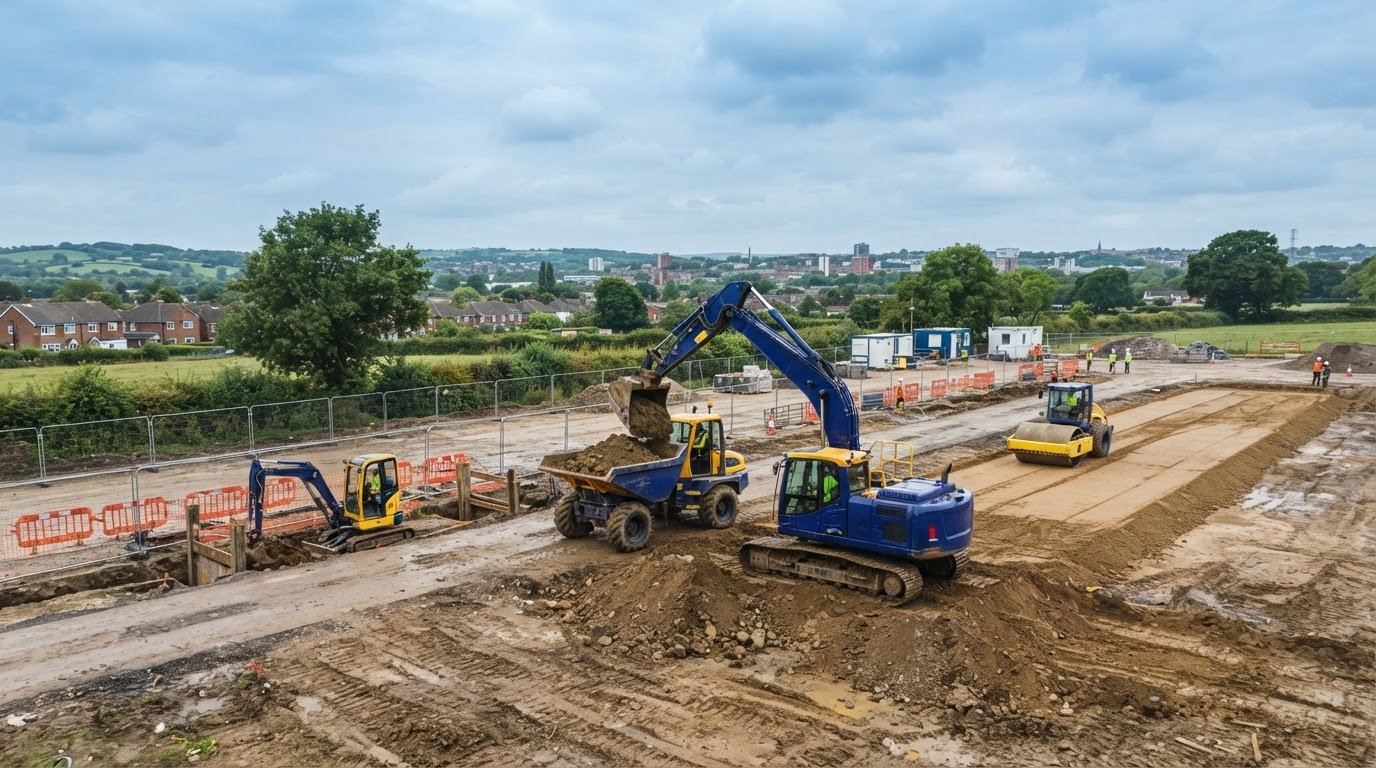
A 360 excavator has an upper structure that rotates through a full circle above its undercarriage. This lets the operator work around the machine without repeatedly repositioning the tracks or wheels. Typical tasks include digging trenches, excavating foundations and loading spoil. For example, on a foundation project, the machine can dig and transfer soil to a waiting dumper, provided the site layout allows safe movement.
What sizes and operating weights of 360 excavators are available to hire?
Hire options span compact tracked excavators through to large machines, with weight and capacity varying by model. For example, the 1.9-ton electric tracked excavator has an operating weight of 1,902 kg; a Komatsu PC 138-11 weighs 15,000 KG; and a Komatsu PC 490LC -11 weighs 47,410 KG. Compare operating weight alongside required reach, digging depth, transport access and the work area before choosing.
What affects 360 excavator hire prices, including delivery and fuel?
Hire arrangements depend on the machine’s size, hire period and attachments. Delivery depends on the site location, vehicle access and unloading space. Check whether fuel is supplied or the excavator must be returned with the same fuel level.
How do I find 360 excavator hire near me and compare local suppliers?
Start with suppliers covering your project location in Yorkshire or nearby areas. Compare whether the machine suits the work and site, and confirm delivery access, unloading space, hire period and fuel arrangements.
Comments